
CAV Resources / Travel Guides
Colorado Travel Guides: Medano Creek Seasonal Beach
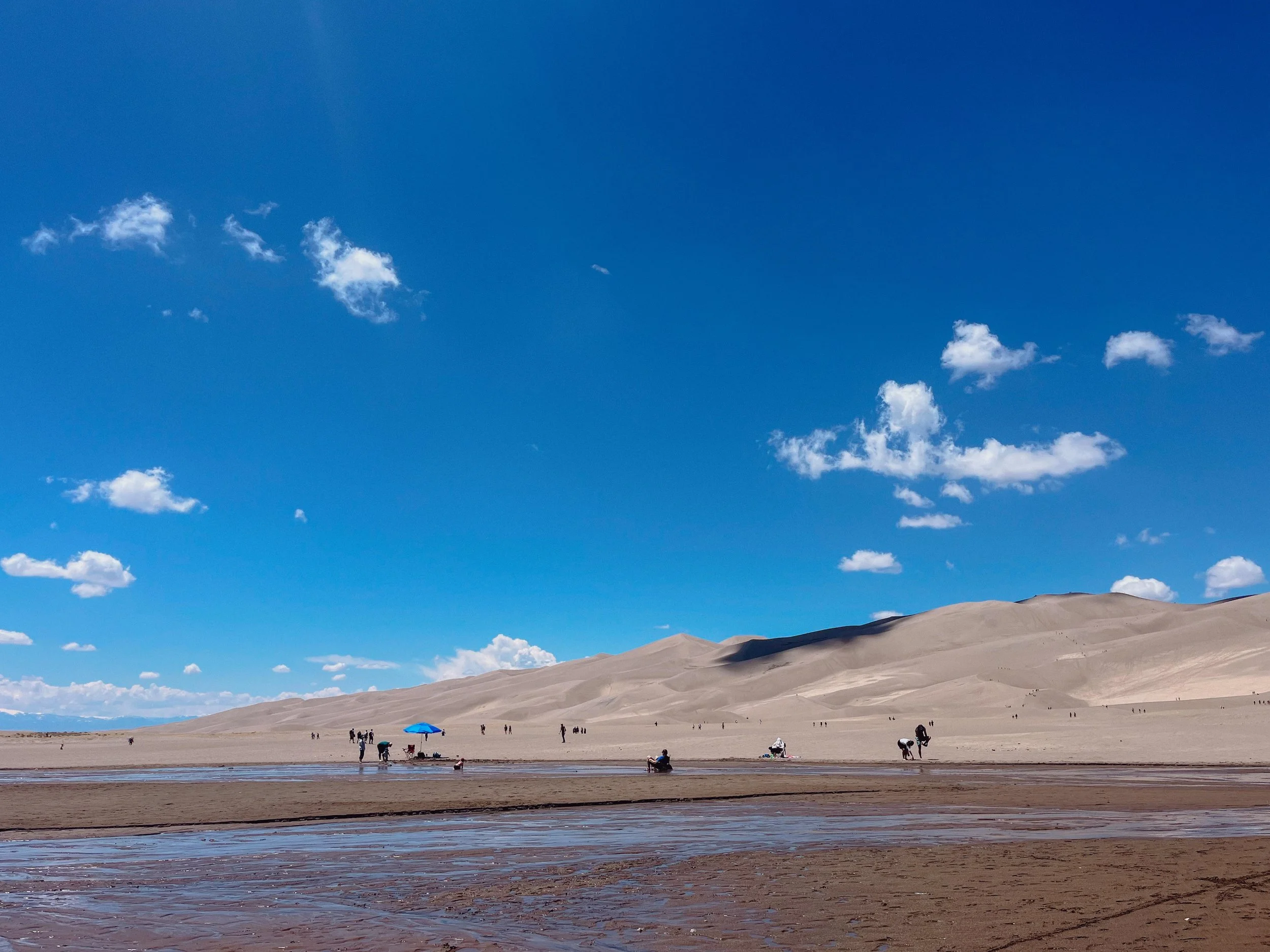
Timing Your Beach Day at Medano Creek: Colorado's Fleeting Summer Experience
March 23rd, 2026
By: Bobby Wild
The Great Sand Dunes hide one of Colorado's best-kept seasonal secrets—a real beach. Here's how to catch it before it disappears.
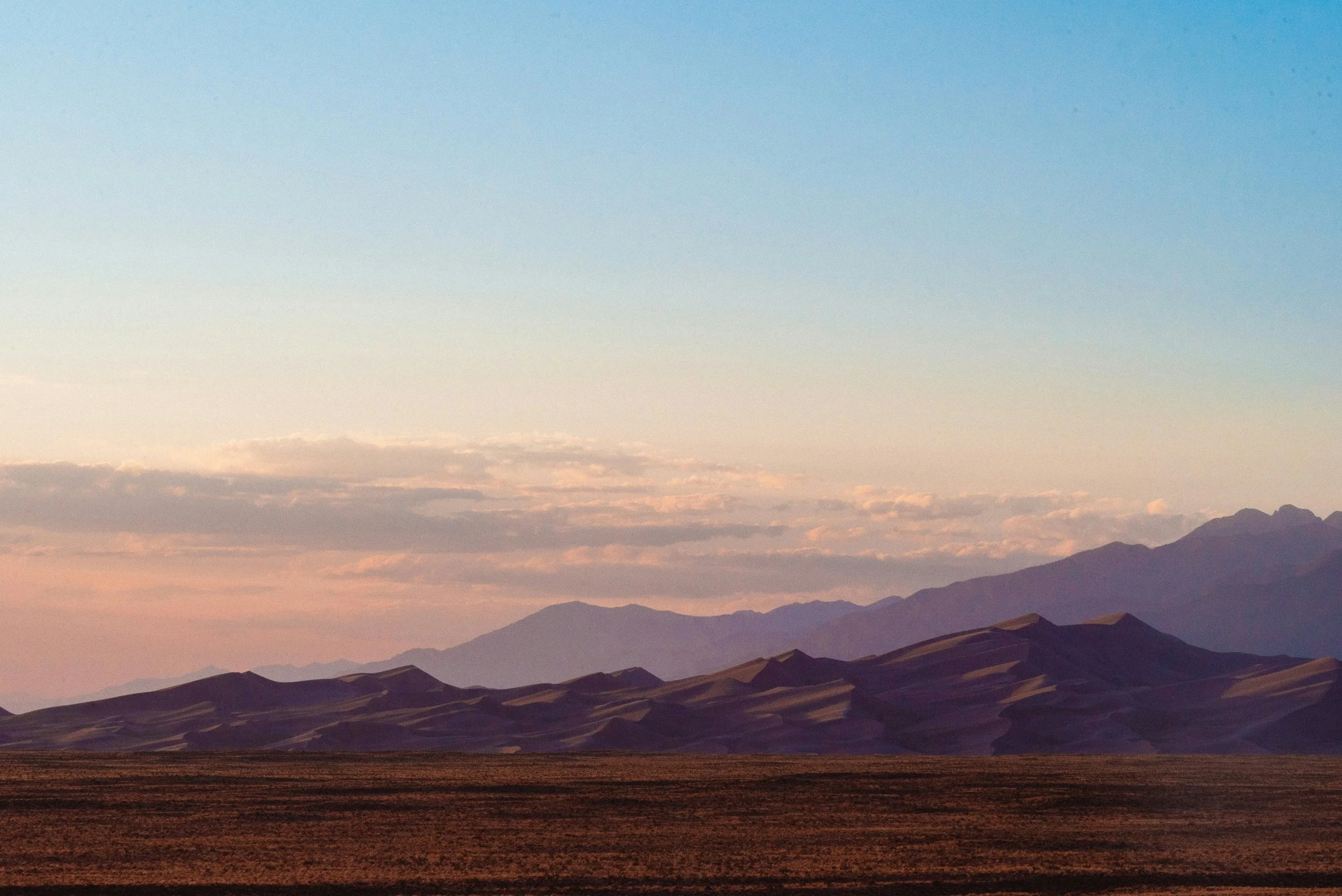
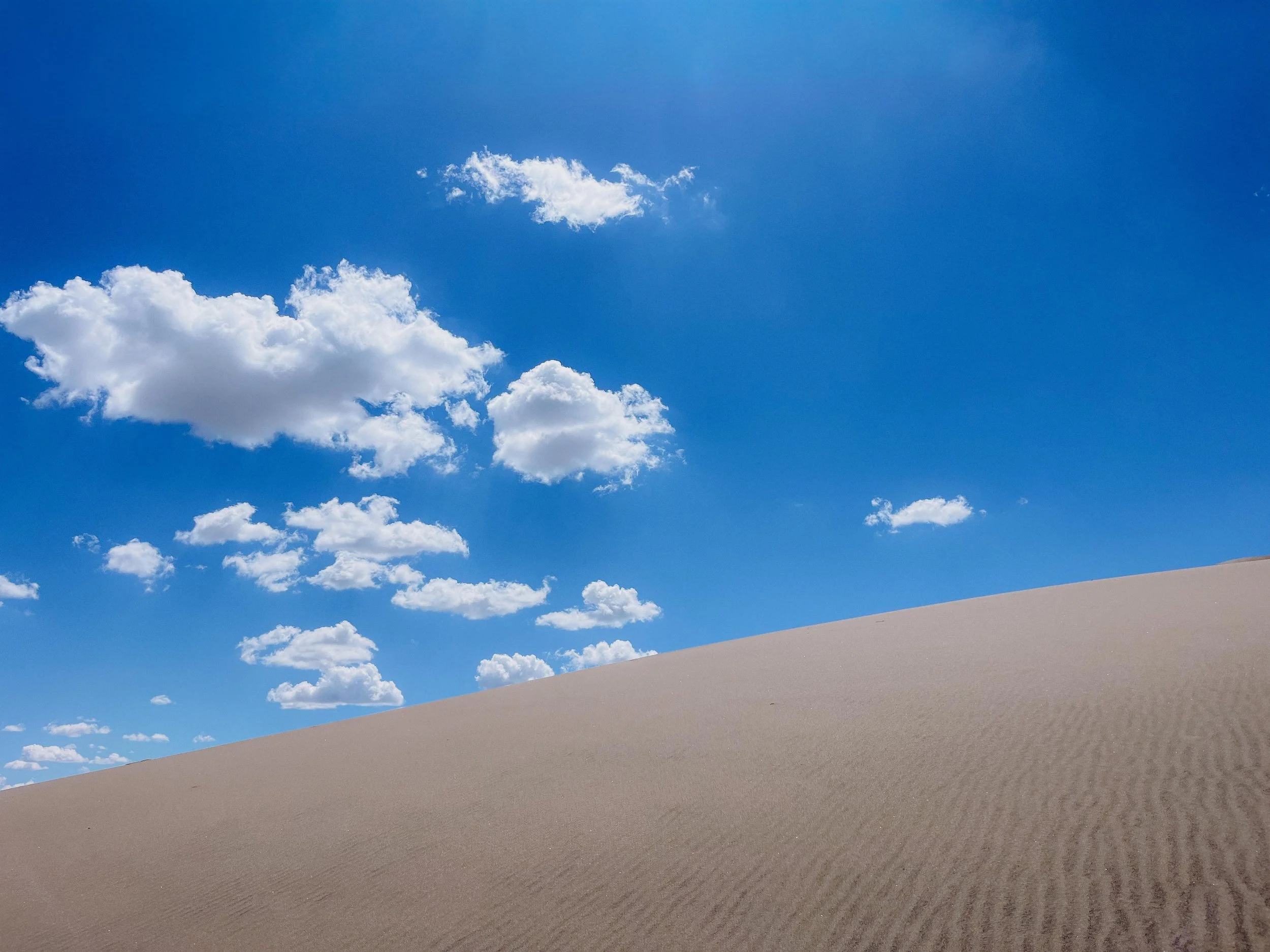
Colorado is littered with landscape marvels, but one of the most mystical is the Great Sand Dunes ➜. Formed over hundreds of thousands of years from the windswept remnants of an ancient lakebed, the San Luis Valley ➜ is home to one of nature's more unlikely creations. Prevailing southwest winds carry sand across the valley floor toward the Sangre de Cristo Mountains, where it piles against the range—and crucially, where opposing northeast winds blowing back through the mountain passes keep the sand from escaping, locking it into these solitary, towering peaks of dune. It's a marvel that only grows more intriguing the farther you hike into the landscape.
Done right, you can get lost in the flowing hills and valleys of this windswept landmass. Done poorly, and you can find yourself stranded in a sweltering landscape devoid of shade or water. Timing your trip to the Sand Dunes is key to a pleasant experience—and being critically precise about when you plan your visit could reward you and your crew with the euphoria of a beach day on Colorado's biggest beach.
Here's what this guide covers:
What Medano Creek actually is, why it exists, and what surge flow means for your visit
The 2026 snowpack situation:
SNOTEL measurements ➜ in the Medano Pass area are currently sitting at just 5% of normal for mid-March — conditions comparable to 2018, one of the driest years on record.
How to adjust your timing in a low-water year to catch the creek before it peaks and retreats earlier than usual
Practical logistics to enjoy the park while navigating crowds
If a spring trip to southern Colorado is on your radar—whether you're running the Medano Pass primitive road ➜, camping at Piñon Flats ➜, or just chasing one of Colorado's most iconic seasonal experiences—read this before you go↓
Who is Colorado Adventure Vans?
Based in the gateway of the Rockies, Colorado Adventure Vans (CAV) is an industry-leading van conversion specialist and resource hub dedicated to the pursuit of off-grid freedom.
Our community is dedicated to high-performance adventure vans deeply rooted in the idea that a reliable rig starts with thoughtful engineering, which is why we provide the same professional-grade design guidance, build notes, and field-tested gear lists that we build into our vans.
QUICK LINKS:
Where do I start? ➜
2026 Battery Guide ➜
Colorado Road Trips ➜
Medano Creek: Colorado's Seasonal Beach
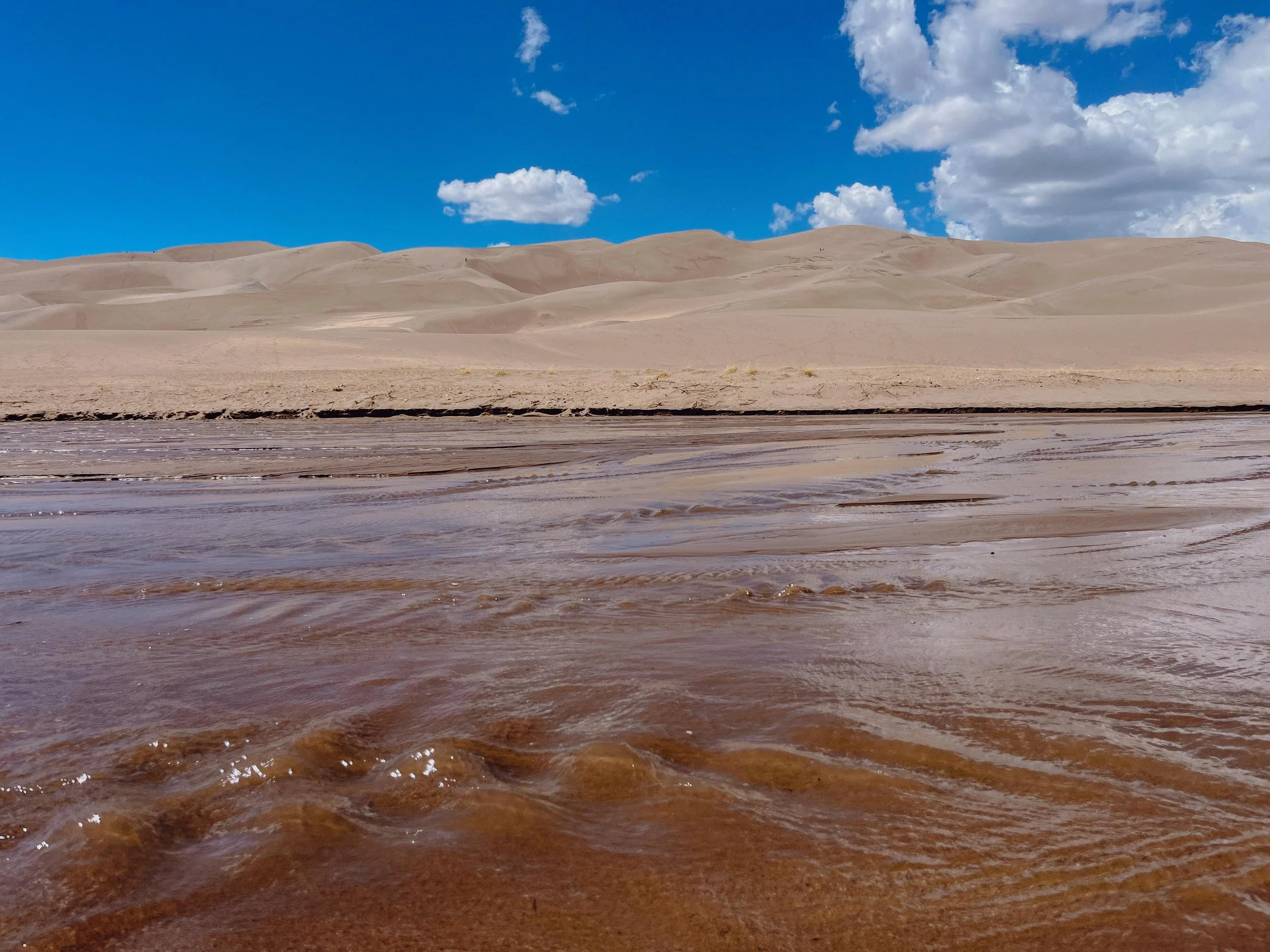
At the base of the dunes, something remarkable happens every spring. Snowmelt from the high peaks of the Sangre de Cristo range ➜ flows down through Medano Lake and onto the valley floor, spreading wide across the sand in a shallow, sun-warmed ribbon of water. For a few precious weeks, the base of North America's tallest sand dunes ➜ becomes a genuine beach: families set up chairs, kids splash in the shallows, and on a good year, the water runs deep enough to skimboard.
But Medano Creek ➜ isn't just a beach. It's one of the only places in the world where you can witness surge flow ➜—a rare phenomenon where the stream moves in rhythmic waves across the sand. As water flows over the sandy creek bed, it builds up small underwater ridges called antidunes. When the pressure gets too great, those ridges collapse, sending a wave rolling downstream roughly every 20 seconds. It's hypnotic, and it's the kind of thing that makes kids (and adults) refuse to leave.
The catch? The creek is entirely seasonal, and the window to experience it at best is narrow.
When to Go:
In an average year, Medano Creek begins trickling down from the mountains by late April, reaching peak flow in late May to early June, when flows can hit around 40 cubic feet per second. By early July the creek typically retreats, and by August it's gone from the main visitor area entirely.
Here's the month-by-month picture:
Late April: The creek starts flowing, usually just a few inches deep in thin braided channels. The cottonwoods along the bank aren't leafed out yet, and spring winds, especially afternoons, can make conditions blustery. Good for a quieter visit, not ideal for a beach day.
Mid-to-Late May: This is the sweet spot in a normal year. Temperatures are in the 60s–70s°F, the creek is approaching or at peak flow, and surge flow is in full effect. Weekends, however, are notoriously crowded — expect long traffic lines, full parking lots, and packed campgrounds. If you can go on a weekday, do it.
Early June: Still excellent in a high-snowpack year. Surge flow tends to be strongest right around this window. After the second week of June, water levels drop and mosquitoes emerge in force near the vegetation — move toward open sand to avoid the worst of them.
Late June onward: Water levels drop to 1–2 inches. The beach experience fades. By July, the creek is gone from the main parking area.
→ Check current and forecast Medano Creek conditions on the NPS website before you commit to a trip date. The park service tracks live flow data and updates forecast conditions regularly.
2026 Warning: This
Year Is Different
Here's what you need to know before you pencil in a Memorial Day weekend trip: 2026 is shaping up to be a critically low-water year, and the traditional late-May timing advice may lead you to show up after the creek has already peaked and retreated.
The Sangre de Cristo Mountains — which feed Medano Creek — have been hammered by drought this winter. As of mid-March 2026, some snowpack monitoring sites in the range have seen near-complete melting, weeks ahead of schedule. SNOTEL forecasts for the Sangre de Cristo watershed are sitting at just 28% of normal — the lowest projection of any watershed in the state. No Colorado watershed is currently above 65% of its seasonal average.
We saw a preview of this in 2025, when a similarly dry year caused the creek to peak early—around early May rather than late May—at roughly 6 cubic feet per second, compared to the average of 40 cfs (cubic feet per second). The depth and duration of flow that year were estimated at less than a third of normal.
What this means for 2026:
Peak flow will likely arrive earlier than usual—potentially mid-May or even late April
The creek may never reach the depth needed for classic surge flow
The window will close sooner—possibly by mid-June or earlier
A weak flow year still offers a beautiful visit, but temper expectations for the wave action
The best strategy this year: watch the NPS conditions page closely starting in late April, and be ready to move quickly when flow peaks. This is not a year to assume the Memorial Day weekend timing will work.
Practical Tips for Your Visit:
Getting there: Great Sand Dunes National Park is about 3.5 hours from Denver and 4 hours from Albuquerque. The nearest town with hotels and services is Alamosa, about 35 miles away.
Entry: The park charges $25 per vehicle, valid for 7 days. No day-use reservations are required in 2026. Note that the free entry days (Memorial Day, May 25) apply to residents only this year. Purchase parks pass here ➜
Camping:
Piñon Flats Campground ➜ is the main in-park option and books up fast during peak creek season. In 2026, reservations open 3 months in advance. If you can't snag a site
Ramble ➜ — a private campground about a mile from the park entrance — is a well-regarded alternative with modern amenities and sandboard rentals on-site ➜
Rustin Rook Campground ➜ is another private campground near the park with amenities.
There is enough public land and open space in the area that you can likely find a nook to park up for a night, though we wouldn’t recommend unloading the whole setup like you would at a traditional campsite. We don’t know of any dispersed sites in the area worthy of publish, but the dyrt is always a good resource to check if that’s your pull.
Crowds: Late May and early June weekends bring some of the heaviest traffic in the park. Arrive early—before 9am—or plan a weekday visit if at all possible.
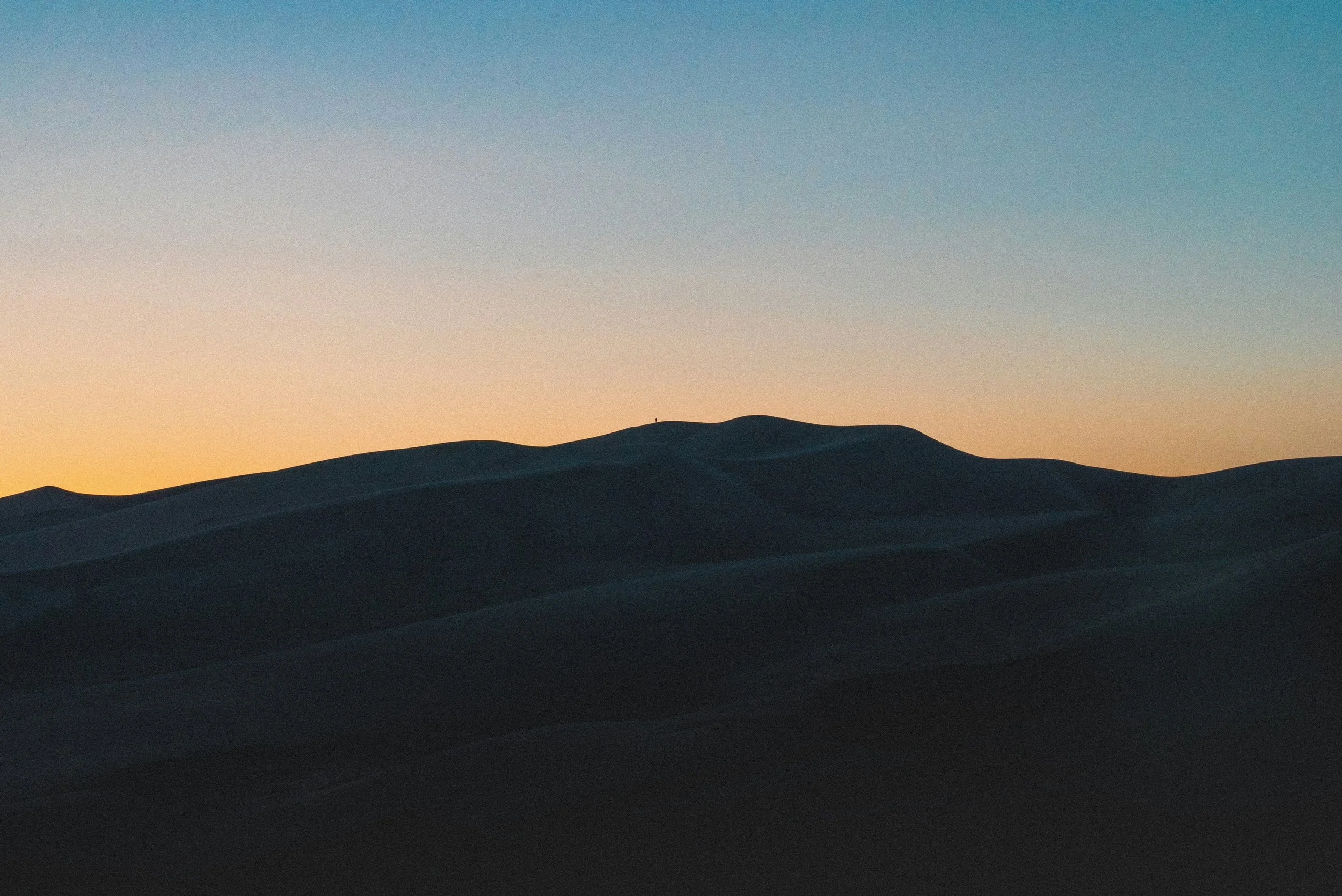
Heat and sun: Sand temperatures at the dunes can exceed 150°F in summer. The creek visit is best done in the morning before the sand heats up. Bring water, sunscreen, and closed-toed shoes for hiking the dunes themselves.
Sandboarding: The National Park Facilities doesn't rent equipment. Gear is available at the Great Sand Dunes Oasis ➜ just outside the entrance, or at Kristi Mountain Sports in Alamosa ➜
The Bottom Line:
Medano Creek is one of those Colorado experiences that sounds too good to be true—a beach, in the desert, at the foot of the tallest sand dunes in North America, with waves. It's real, and it's worth planning around. In a low-snowpack year like 2026, that planning matters even more. Watch the conditions, go earlier than your instincts suggest, and pick a weekday if you can.
The creek won't wait for you. Go find it while it's there.

Follow us on Social
Check us out on social media, too, & make sure to leave a comment every now and then, it helps us reach the right people.