CAV Resources / Buyer’s Guide
Roof Racks Explained
Van roof racks Guide: How to choose the right setup for your build
April 23rd, 2026
By: Bobby Wild
Your roof is some of the most VALUABLE real estate in your van —Yet most builders pick a rack based on someone else's Instagram photos.
Summer changes how you use your roof. Solar panels are working overtime. Kayaks, paddleboards, and bikes need somewhere to live. Roof tents turn your campsite into a view. And if you're building or upgrading now, the decisions you make up top will either make that all seamless — or make you wish you'd thought it through differently.
This guide doesn't start with brands. It starts with your build. We'll frame the three tiers of rack systems, walk through every question that actually drives the decision, and show you how it all fits together before you commit to anything.
IN THIS GUIDE
The three tiers of roof racks ➜
The questions that drive the decision ➜
Think about the build holistically ➜
Who is Colorado Adventure Vans?
Based in the gateway of the Rockies, Colorado Adventure Vans (CAV) is an industry-leading van conversion specialist and resource hub dedicated to the pursuit of off-grid freedom.
Our community is dedicated to high-performance adventure vans deeply rooted in the idea that a reliable rig starts with thoughtful engineering, which is why we provide the same professional-grade design guidance, build notes, and field-tested gear lists that we build into our vans.
QUICK LINKS:
Where do I start? ➜
2026 Battery Guide ➜
Colorado Road Trips ➜
The three tiers of
van roof racks
Before diving into what your build needs, it helps to understand how the market is structured. Van roof racks broadly fall into three categories — each built for a different kind of adventure van.
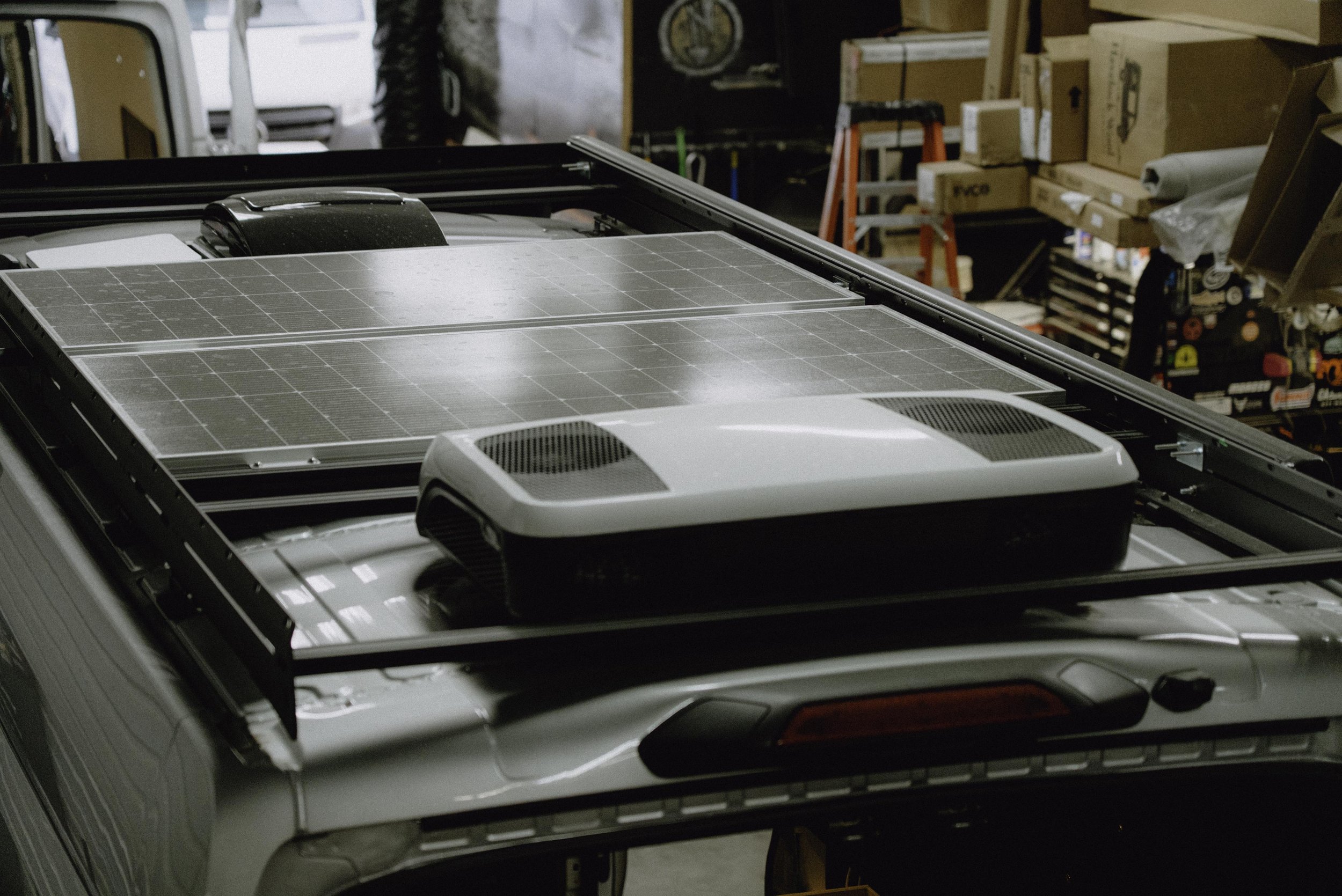
Modular platform racks
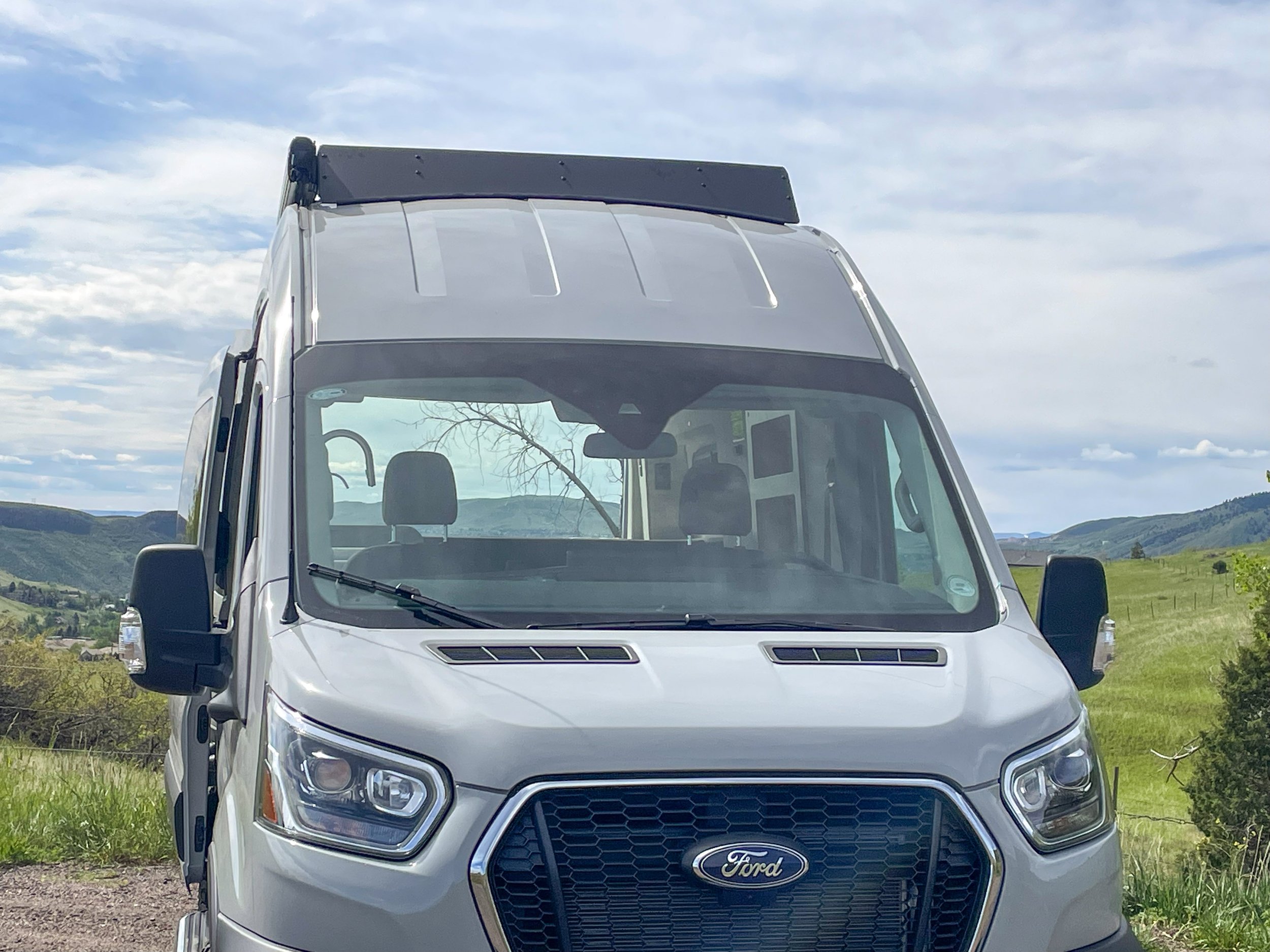
Brands like Flatline Van Co, Owl Vans, Unaka, and Aluminess build full modular platforms engineered for maximum flexibility. These systems feature a track-and-accessory ecosystem that lets you configure for the trip and reconfigure each season — adding lighting, antennas, cargo management, or additional mounts over time. Load capacity is high, the fit-and-finish is premium, and the weight reflects that.
CAV recommendation: This is the tier we recommend for most builds. The ability to evolve your exterior setup over time, without replacing the rack itself, is worth the investment. If you're serious about your build, start here.
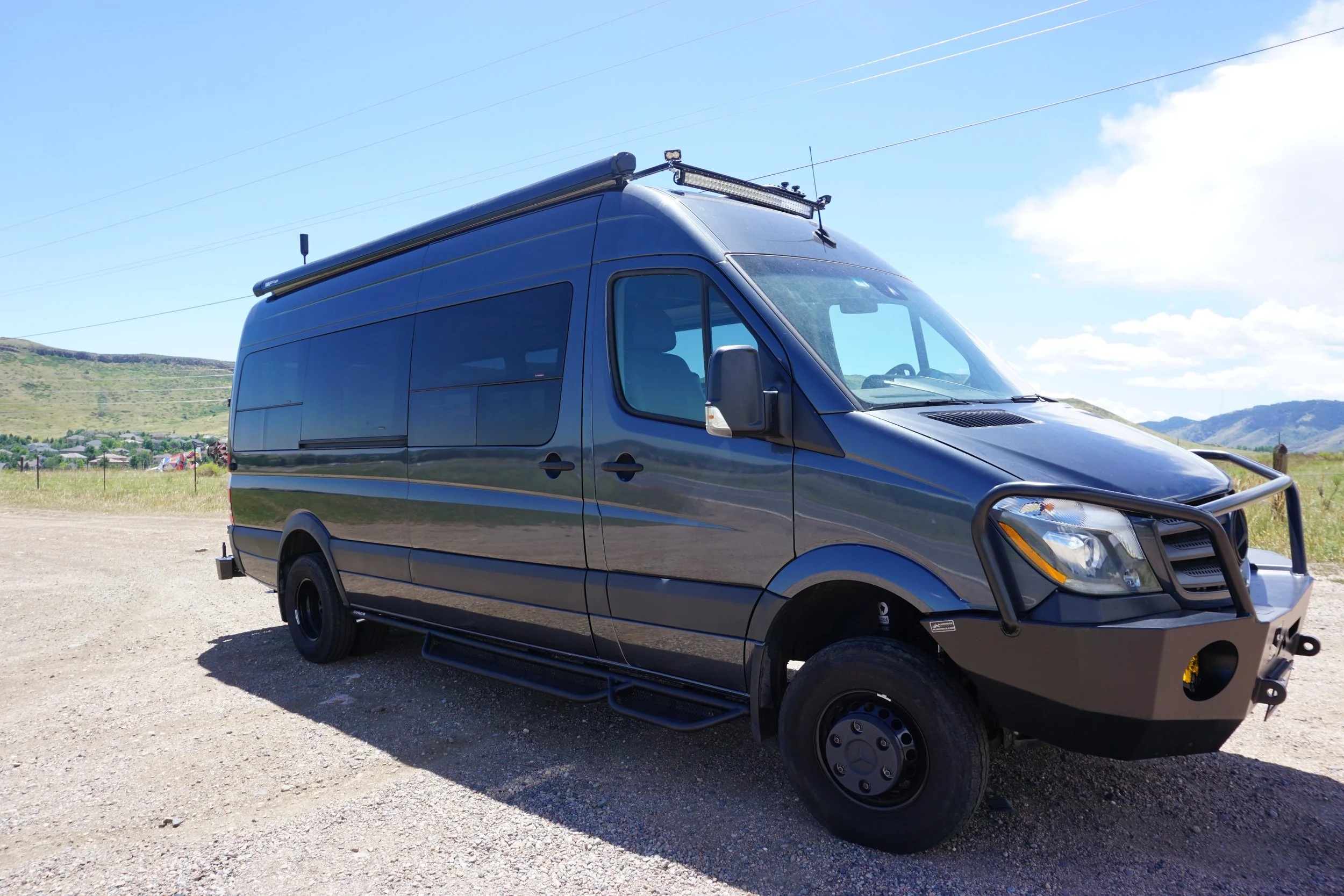
Welded or tube-frame racks
A step down in modularity but not in function. Welded and tube-frame racks deliver many of the same outcomes with a stronger frame. They're less configurable and often designed around a specific van model or general size range rather than a fully open accessory system. A solid option for builds going for a mean look with a clear, stable plan that won't change much over time.
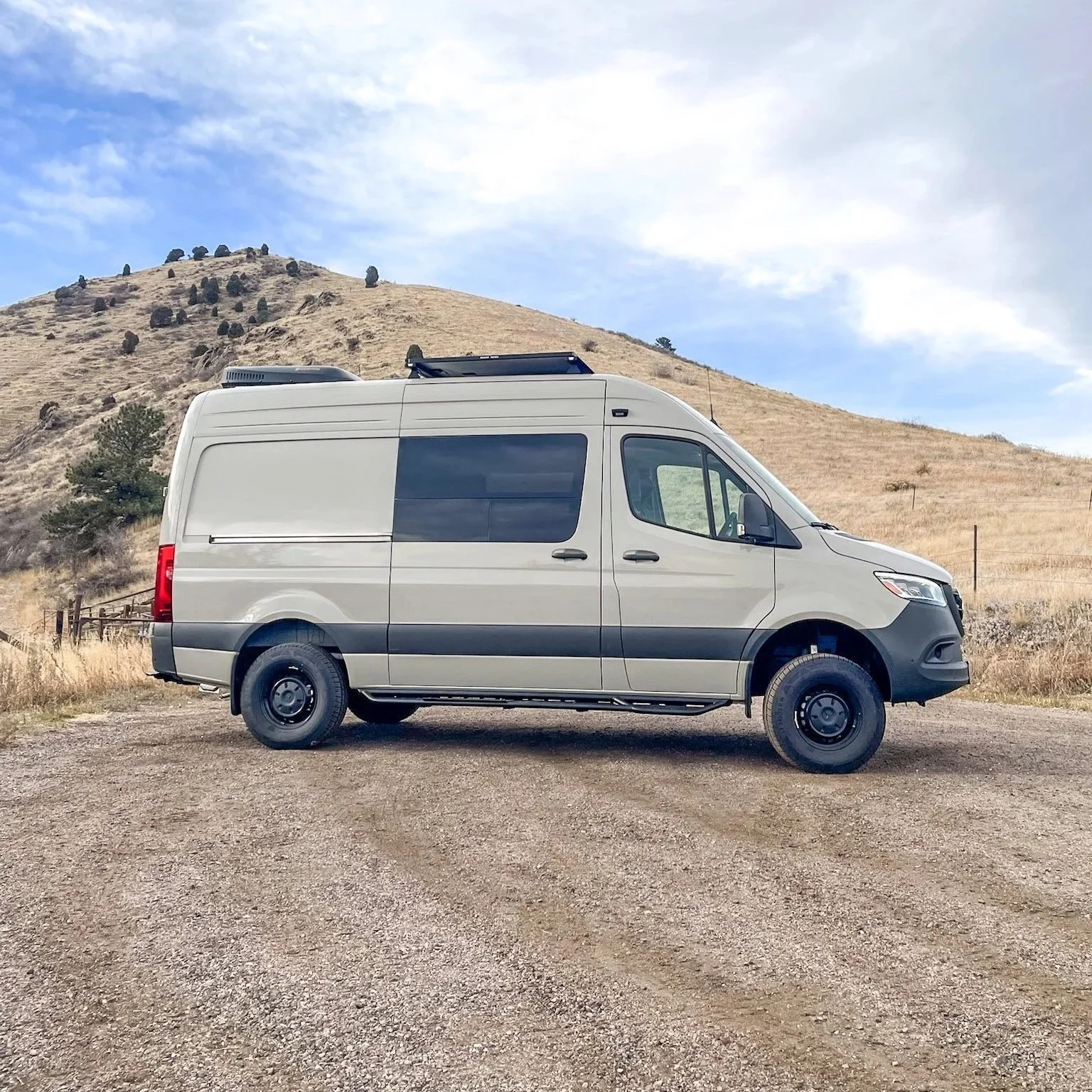
Crossbars and roof rail systems
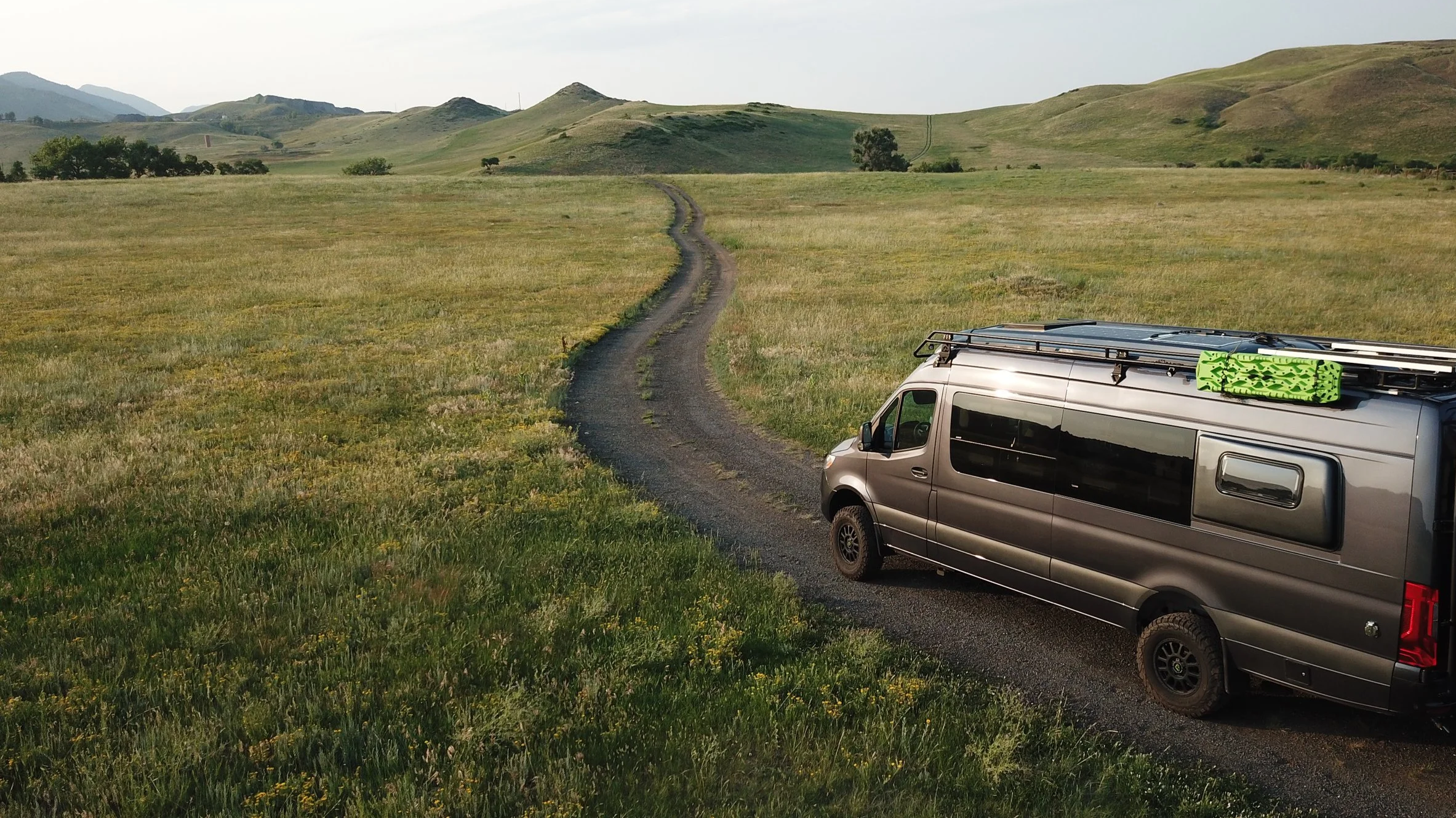
The fastest install, lowest profile, and lowest cost option. Crossbars handle lighter loads well — a solar panel or two, a kayak, a rooftop cargo box — and they're the right call for someone who needs function without committing to a full platform. You'll sacrifice some standing room, a bit of load capacity, and the built-out look. But for a first build or a budget-conscious one, they get the job done.
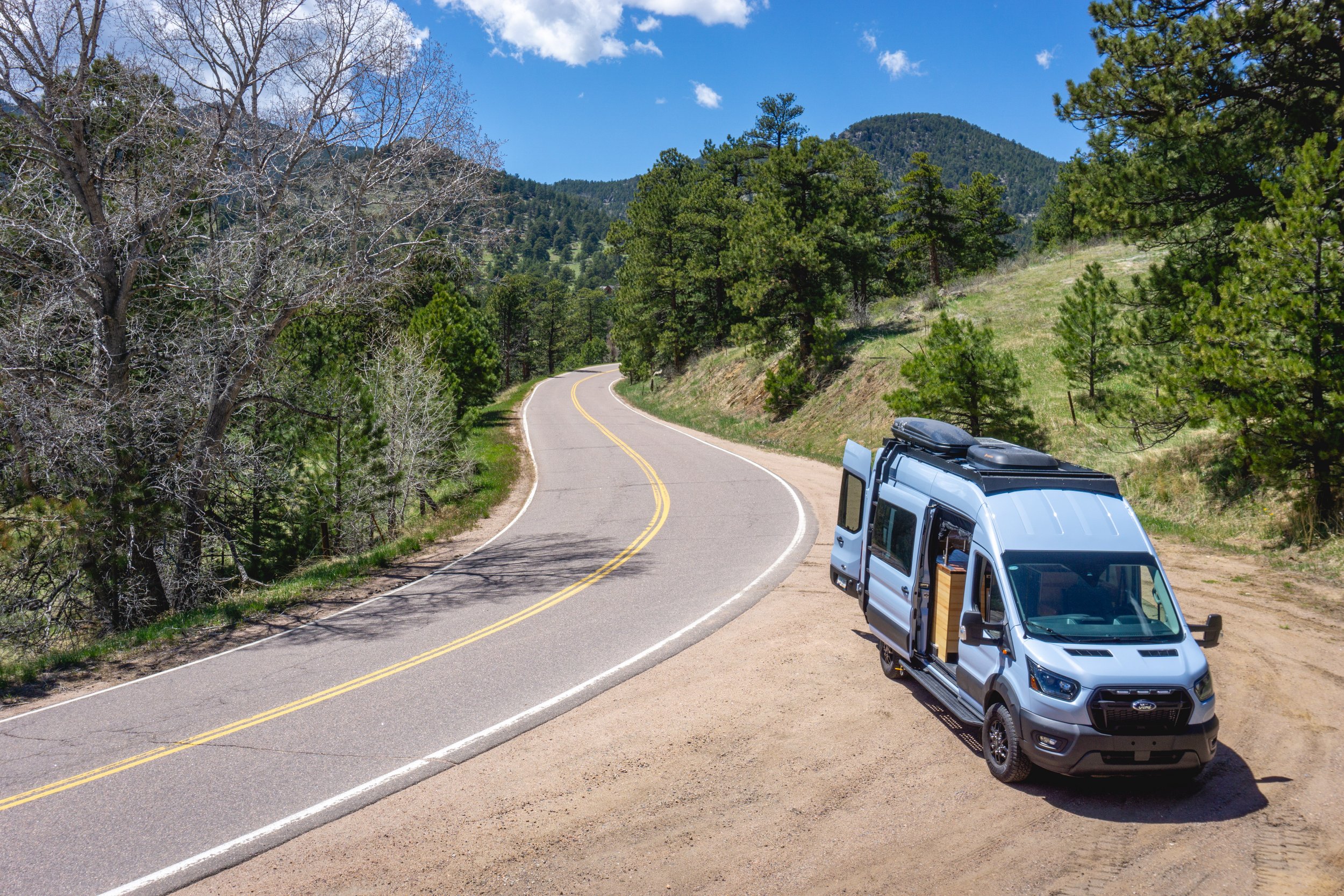
Get Inspired with Trail ➜
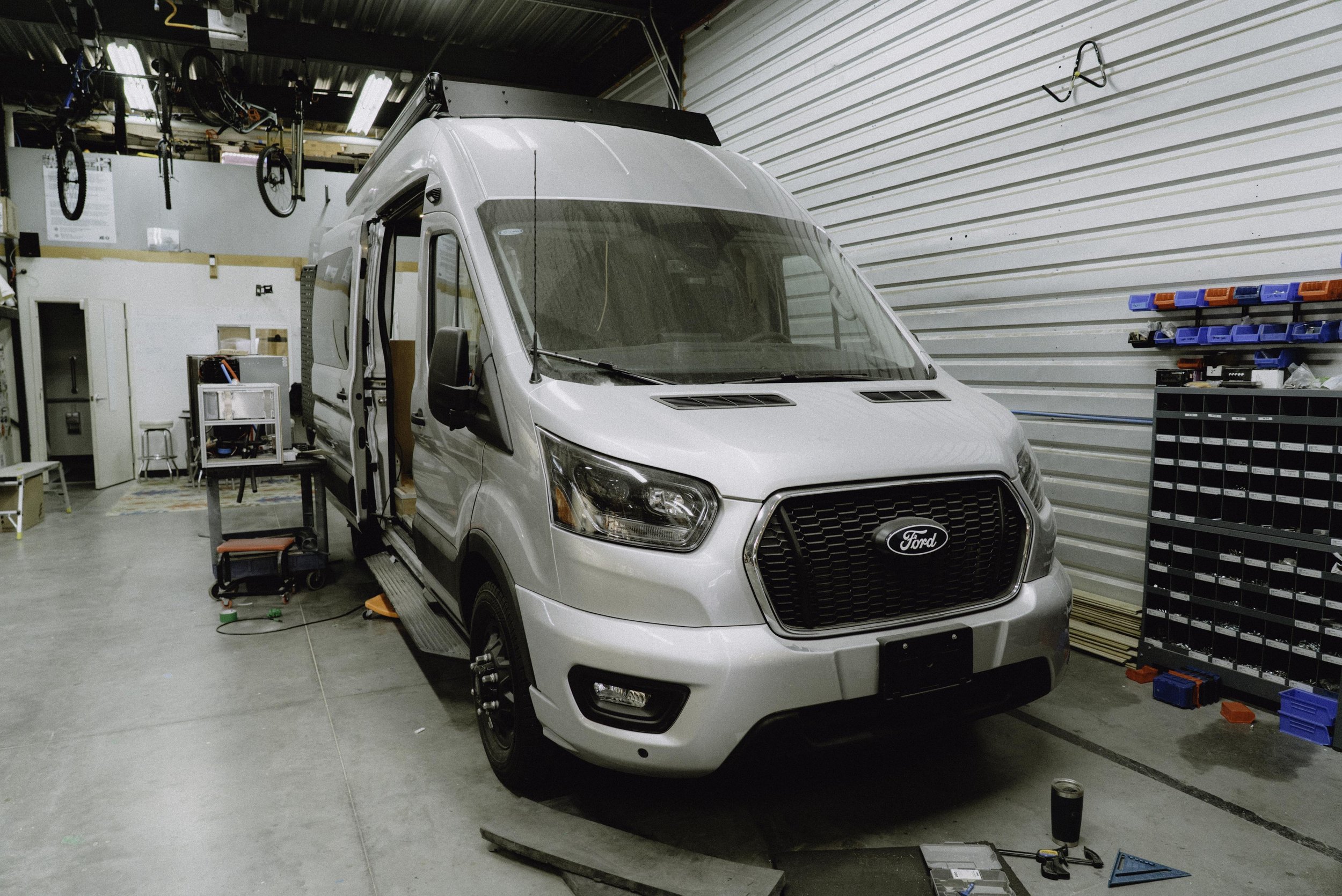
Built on Ford Transit AWD chassis, this campervan is built for Colorado roads.
Inside, we transform this capable foundation into a sophisticated, off-grid sanctuary featuring precision-engineered cabinetry and natural materials.
The questions that actually drive the decision
This is where most people go wrong: falling in love with a rack before answering the questions that determine whether it'll actually work. Walk through these before you commit to anything.
Do you need a ladder?
Even with a low roof van roof access will be limited without a ladder. Some van owners keep a collapsible ladder in their garage, but most opt for a permanent mounted ladder as a part of their roof rack investment. Ladder placement comes down to two options: side mount or rear door mount. Side-mount ladders are more accessible day-to-day — great for camp life when you're loading gear or getting up for a sunrise view. Rear door ladders keep the sides of the van cleaner for daily driving but require the door to be closed before you climb. If you're often parked on slopes or prioritize quick rooftop access, side mount wins. If clean lines and urban driving matter more, rear is the move.
How much solar are you planning to run?
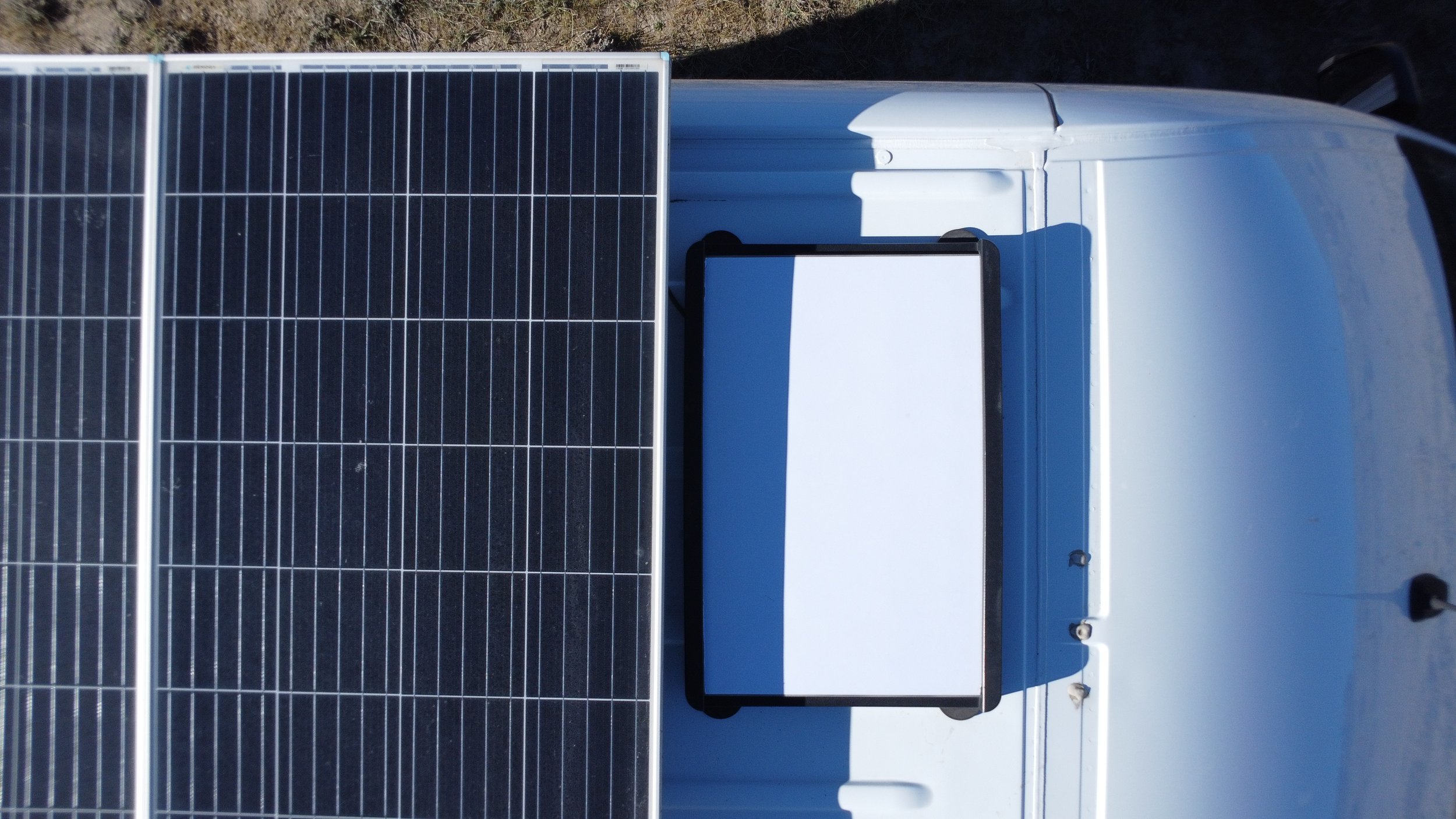
Panel count determines platform square footage. If you're running 400W or more, as many CAV builds do, a full platform earns its cost just in panel capacity and clean wire routing. Crossbars can technically hold panels, but they limit your layout options and complicate how cables get from the roof to the interior. The wind deflector at the front of roof racks can ease the stress placed on mounts minimizing lift hitting the panels. It doesn’t happen often but soar panels have been known to soar from mount failure at highway speeds.
Where is your fan located?
Fan position is typically centered or offset toward the cab. Whichever placement you choose drives cutout placement in your rack. A rack that doesn't account for a Maxxair or Fantastic Vent location creates problems you can't solve after installation. This is one of the most common mistakes in build sequencing: ordering a rack before locking in fan placement.
Are you adding rooftop AC?
Units like the Dometic RTX 2000 require a dedicated cutout, a specific mounting footprint, and structural consideration. This is not something to add around an existing rack. If rooftop AC is in your plan, even someday, it needs to be decided before the rack is ordered, not after.
Starlink: permanent or portable?
A flat-mount Starlink Mini can be cleanly integrated into a rack panel. A portable dish on a tripod is a completely different situation. If permanent connectivity is part of your build, it affects cable routing, rack positioning relative to your solar array, and overall profile height. Know which direction you're going before anything gets mounted. Learn more about Starlink
Are you adding a cargo box?
Rooftop cargo boxes need a clean crossbar mount and clearance above. They're generally incompatible with full standing-room platforms — which means committing to a cargo box largely determines your rack tier. They're a solid choice for ski season or storing extra gear, but they narrow your options. Make sure that tradeoff works for your broader build vision.
Do you want to stand on the roof?
Underrated feature. Scenic overlooks, stargazing, easy gear management from above — standing room changes how you use your van at camp. It requires a full platform with an appropriate load rating and almost always a ladder. If this is part of your vision, it's non-negotiable at the spec stage.
What about an awning?
Most van awnings, including the widely used Fiamma F45S, bolt directly to the van's wall and are compatible with most rack systems. On Sprinters specifically, there's also the F80S option, which mounts to the roof rail and uses different hardware. If you're running a Sprinter and want a roof-mounted awning, that distinction matters before you order anything.
Have you checked your clearances?
A full modular platform can add significant height to your roofline. Add a cargo box or antenna array on top of that, and you may be looking at 12–14 inches or more above your stock roofline. Parking garages, campground barriers, and car washes all have clearance limits. Measure before you build —this is one of the most common oversights we see.
Thinking about the build holistically
The roof rack doesn't exist in isolation. It interacts with your fan, your AC unit, your solar array, your ladder, your antenna, your Starlink, and your clearance constraints. The best rack for your build is the one that's specced with all of those things in mind —not added around them afterward.
This is where working with a builder who thinks through the whole system first actually pays off. The questions above aren't things you answer in isolation either. They inform each other. Your solar goals affect your platform size. Your fan location affects your cutout spec. Your AC decision affects your structural plan. Getting those answers on the table early is what separates a build that works seamlessly from one that requires expensive workarounds.
If you're planning a new build, start with the questions in section two before you fall in love with any particular rack. If you're upgrading an existing van, the constraints narrow the field fast —and that's actually useful. Let them guide you.
Ready to figure out what belongs on your roof? We'll walk through your build goals, your constraints, and what actually makes sense for the way you travel.
Similar Posts
-
![A digital medical ventilator with a display screen showing various measurements and controls, labeled 'ECOFLOW' on the side.]()
2026 Battery Guide
Get up to date on the latest trends in portable power storage for your camp setup.
-
![Close-up of solar panels mounted on the roof of a white vehicle.]()
Starlink for Van Life
Every build starts with a conversation and ends with something ready to carry your story forward.
-
![A white camper van parked on a dirt lot overlooking a canyon with mountains in the background and a full moon in the sky.]()
25 CAMP ESSENTIALS
From coffee at sunrise to gear that earns its keep, this kit covers the essentials we always bring—and rarely replace.
-
![Sunset over rolling hills with mountain range silhouette in the distance.]()
COLORADO ROAD TRIPS
Explore Colorado with curated loops built for van travel—complete with hikes, campsites, and views that don’t show up on autopilot.
-
![Illustration of a camper van with mountain and forest graphics, and the words "RENT HONEY" in bold orange letters beneath it.]()
Rent van life
No need to own the van to live the adventure. Hit the road in a fully equipped rig—just pack a bag and drive.