
CAV Resources / Buyer’s Guide
Off-Grid Electrical Systems for Campervans: 2026 Battery Guide
2026 Campervan Battery Guide: Epoch vs. EcoFlow for Off-Grid Power
Research this 2026 Campervan Battery Guide for choosing the right power system. Getting it right is the difference between true off-grid freedom and being tethered to a shore-power pedestal. We’ve benchmarked the industry’s leading batteries for capacity, footprint, and ease of installation to help you spec the perfect system for your build.
This guide breaks down exactly which battery setup fits your energy habits and your van’s footprint.
by: Bobby Wild
Jan 29, 2026
Ideally, your electrical setup should be invisible—it just works. However, building a reliable system requires more than just buying a battery, you also have to calculate solar input, alternator charging, and typical daily use in kWh.
As professional custom van builders with over 100 power system installations under our belts, we’ve seen what fails in the field and what stands the test of time. Whether you’re deciding between a fully custom system charging as your drive with DC to DC alternator charging, or solar power fueling an EcoFlow all-in-one, this guide will help you optimize your van's power for maximum efficiency and reliability. (Heads up: some links in this guide are affiliate links — we may earn a small commission if you buy through them, at no cost to you. It helps keep content like this free.)
CAV recommended Batteries:
Epoch Custom ➜ space and budget efficiency at 12v
Ecoflow all-in-one ➜ Easy entry point and expandability
Find detailed notes to further guide your purchase decision below ➜
QUICK LINKS
Ask us anything!
Questions about your adventure van designs? Visit our where do I start page to dive deeper, or send an email to info@coadventurevans.com. From DIY build tips to upgrade recommendations, we’re here to keep your project moving forward.
What to consider before PURCHASING a BAttery
Before you click "buy" on a battery, you have to understand the job you’re asking it to do. Buying hardware without a plan is the fastest way to end up with a system that is either insufficient for your needs or unnecessarily expensive. To get it right, we look to balance your daily consumption habits against your long-term travel goals. (use this calculator to help you size your system)
Expand the sections below to see the specific factors we evaluate at CAV to ensure our clients never have to worry about their power levels once they hit the road.
-
Before choosing your hardware, you must define your power budget. We guide our clients through a comprehensive energy audit, listing every appliance—from the fridge and Starlink to induction cooktops. If you want to do your own audit, Far Out Ride made a system calculator that can help tell you how much power you need. Crucially, your system should be designed with scalability in mind.
If you plan to add a 12V air conditioner or an electric water heater in the future, your current battery bank and wiring must be able to support that increased load without a complete system teardown.
-
Once you’ve sized your battery bank, the next challenge is replenishing that energy. At CAV, 90% of our builds utilize a triple-redundant charging strategy: Alternator, Shore Power, and Solar.
We rank them in that order for a reason. DC-to-DC (Alternator) charging is our top recommendation because it’s the most consistent; your van is a rolling generator. It generally offers higher amperage than solar, ensuring your batteries are topped off by the time you reach camp. Shore Power is the fastest recovery method and is vital for 'plug-and-play' maintenance at home or running high-draw loads like A/C via an inverter/charger bypass. Finally, Solar is your silent partner. While it’s the slowest method, it’s essential for 'boondocking' to offset small, parasitic loads like your fridge and lights while parked."
Dive deeper at our where do I start page ➜
-
Before diving into specific products, let’s talk about the heart of your system. In 2026, we only recommend one chemistry for campervan builds: LiFePO4 (Lithium Iron Phosphate). Unlike old-school AGM batteries, Lithium offers double the usable power, weighs half as much, and lasts for thousands of cycles. Whether you choose a custom-built bank or an all-in-one unit, LiFePO4 is the only investment that makes sense for the modern traveler.
-
There are two ways to bring Lithium into your rig: a Custom Component System or a Portable Power Station (often called a 'Solar Generator').
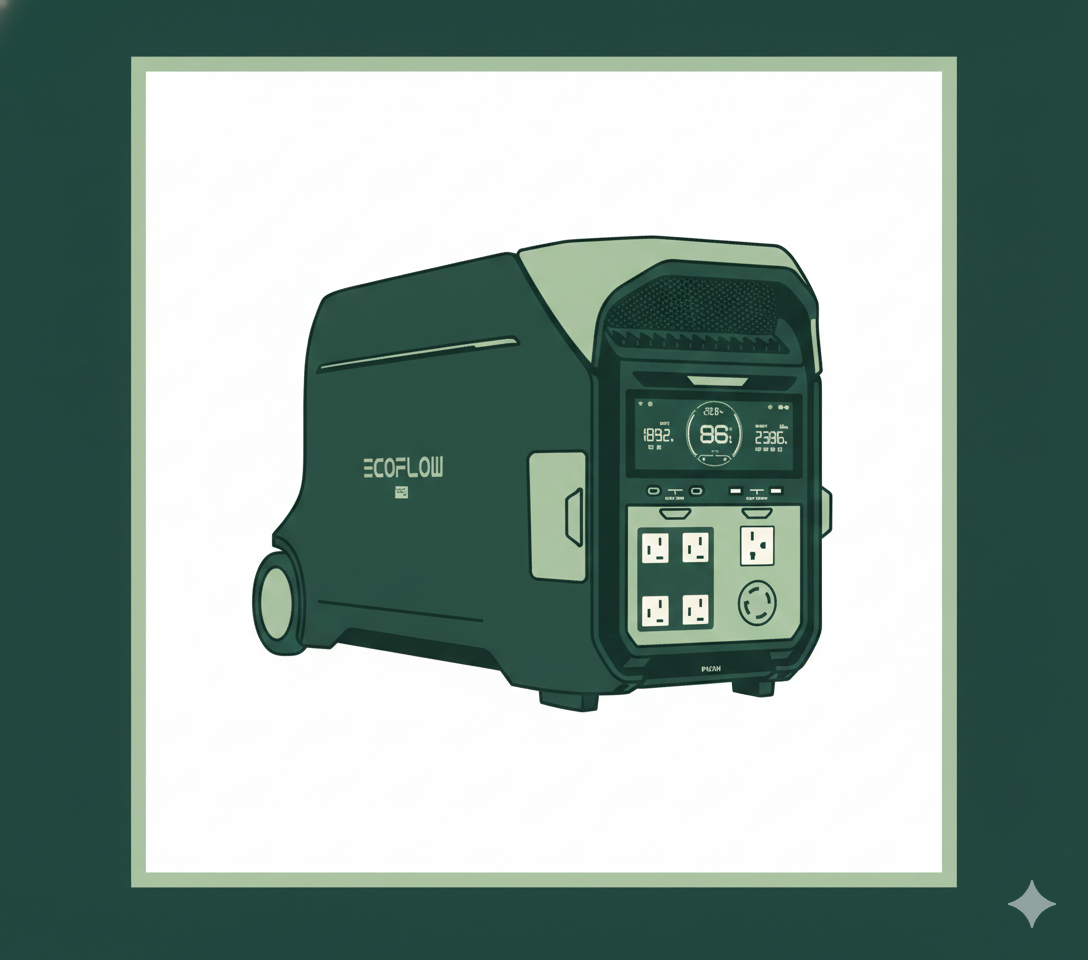
Brands like EcoFlow, Bluetti, and Jackery have changed the game for DIY builders. These all-in-one units combine the battery, inverter, and charge controller into a single "plug-and-play" box. This removes the headache of wire termination, fusing, and component compatibility. If you’re looking to simplify your build, somthing like an EcoFlow Delta 3 Pro can significantly reduce your installation time.
While we install high-capacity custom systems for our full-scale builds to maximize communication and efficiency, a portable unit is a fantastic entry point. However, even with an all-in-one unit, we still recommend a few "pro" additions to make your van feel like a home:
12V Fuse Block: Don't plug every light and fan directly into the battery. Run one high-gauge wire from the battery to a Blue Sea Fuse Block (link), then branch out to your appliances for a cleaner, safer install.
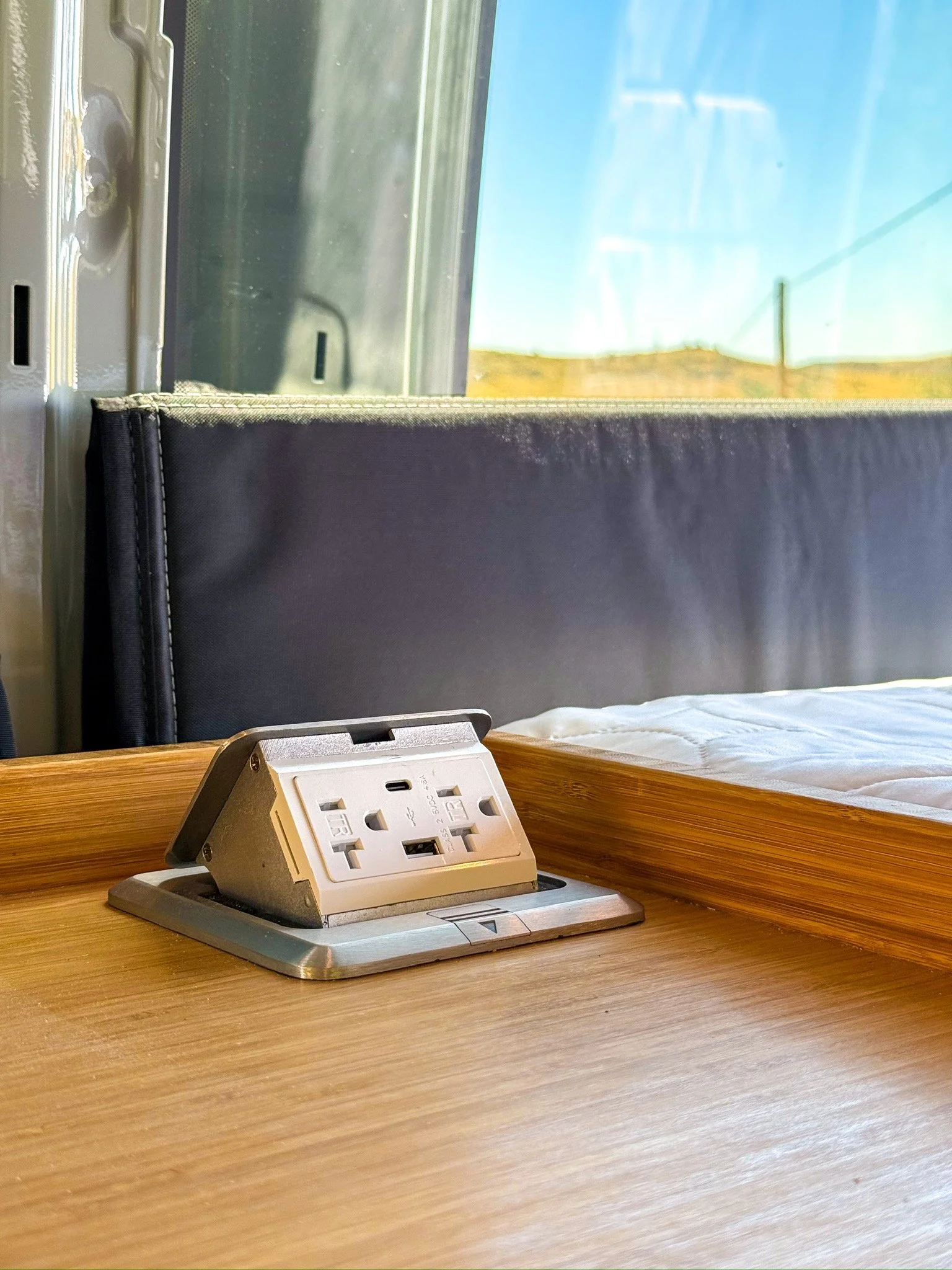
AC Circuit Integration (The "Whip"): Instead of running extension cords across your floor, you can daisy-chain permanent outlets through your walls and plug them into the battery unit’s AC output.
Dedicated DC-to-DC Charging: Many "solar generators" charge slowly via a cigarette lighter. We recommend using a dedicated DC-to-DC charger compatible with your unit to ensure you’re actually topping off while you drive. Some of these all in one solutions even have directly compatible alternator chargers.
Solar Array: Whether roof-mounted or portable, ensure your panels are compatible with your unit’s voltage input limits.
Ready to Power Your Build? Choosing a battery is the most important investment you’ll make in your van's reliability. As you look at the recommendations below, keep three things in mind: capacity for your heaviest days, redundancy in your charging, and the future-proof security of Lithium (LiFePO4). We’ve narrowed the market down to these three tiers to simplify your decision—each one is a "no-regrets" solution designed to get you off the grid and keep you there.
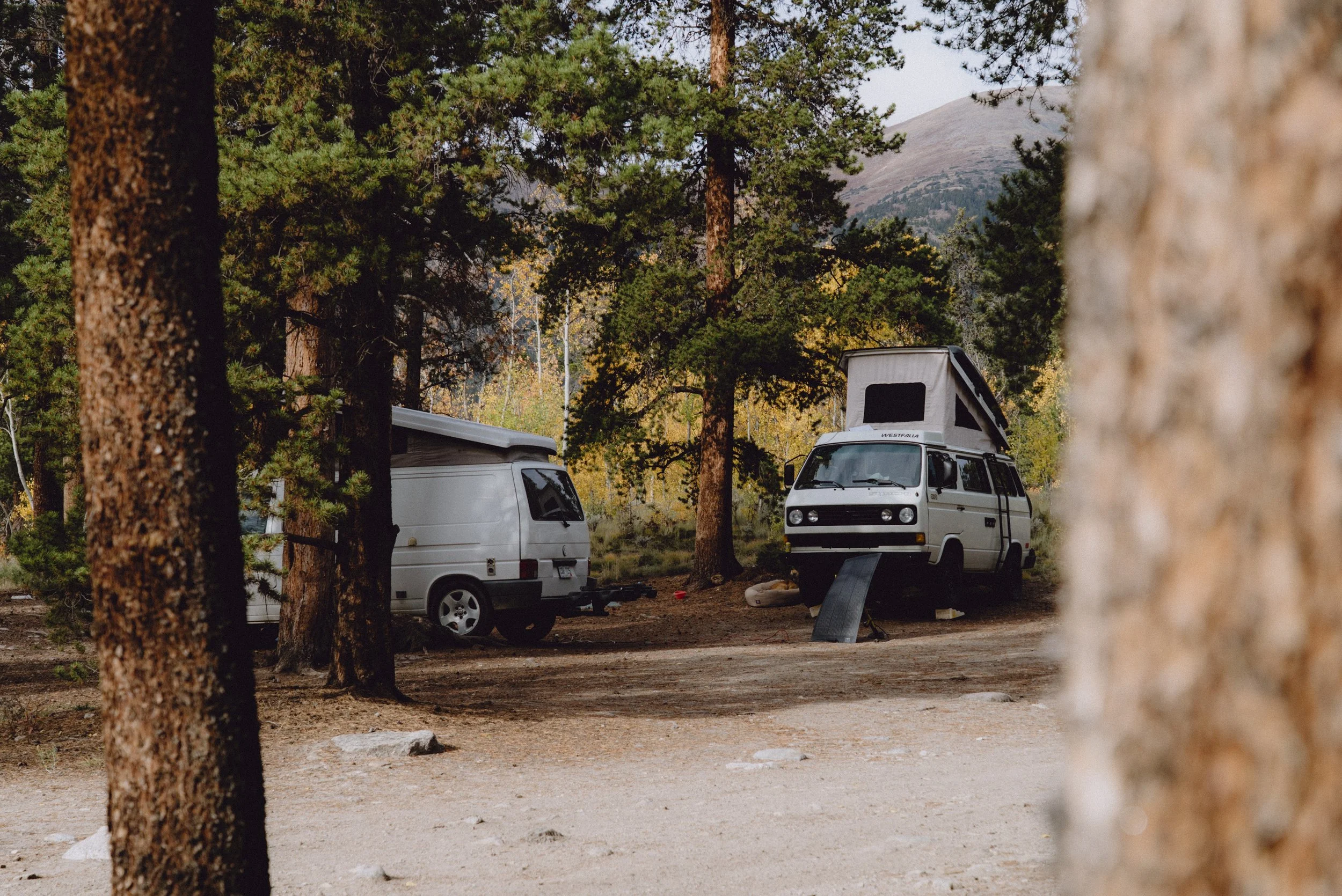
Product Recommendations
**Affiliate Disclosure
This post contains affiliate links. As an Amazon Associate, we earn from qualifying purchases. This helps support the site at no additional cost to you.
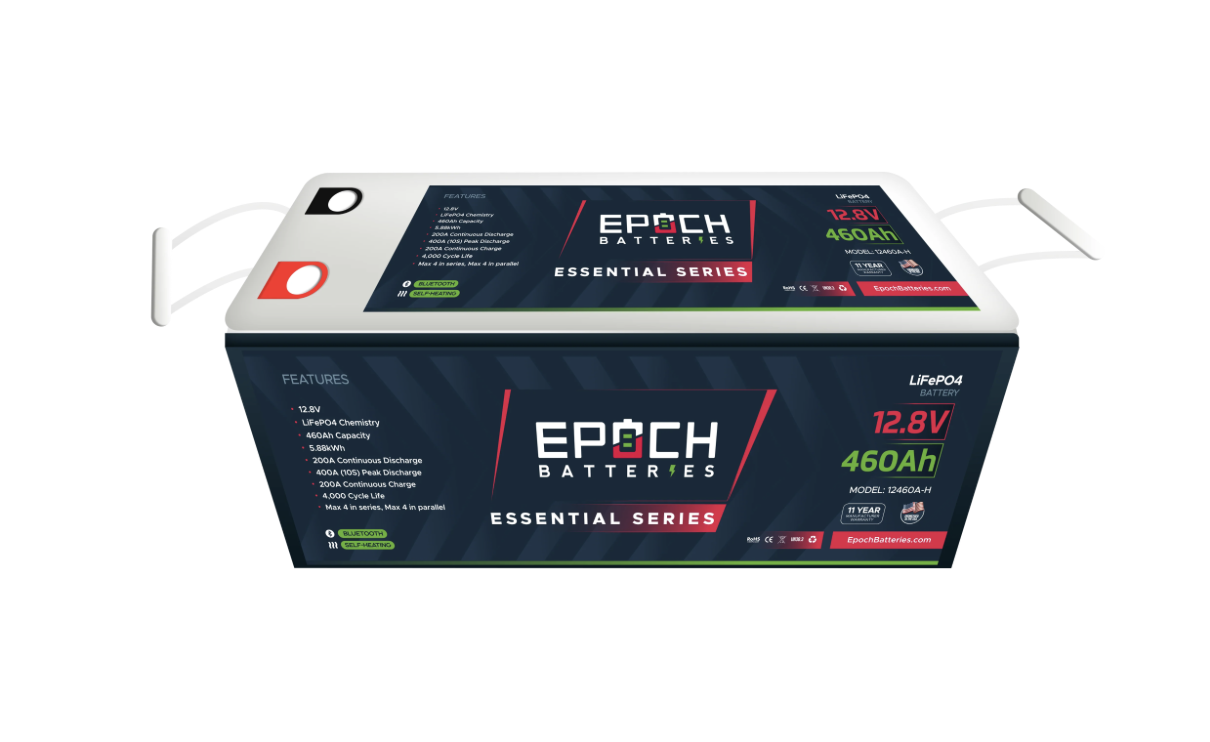
EPOCH Self Heated Bluetooth LIFEPO4 Batteries
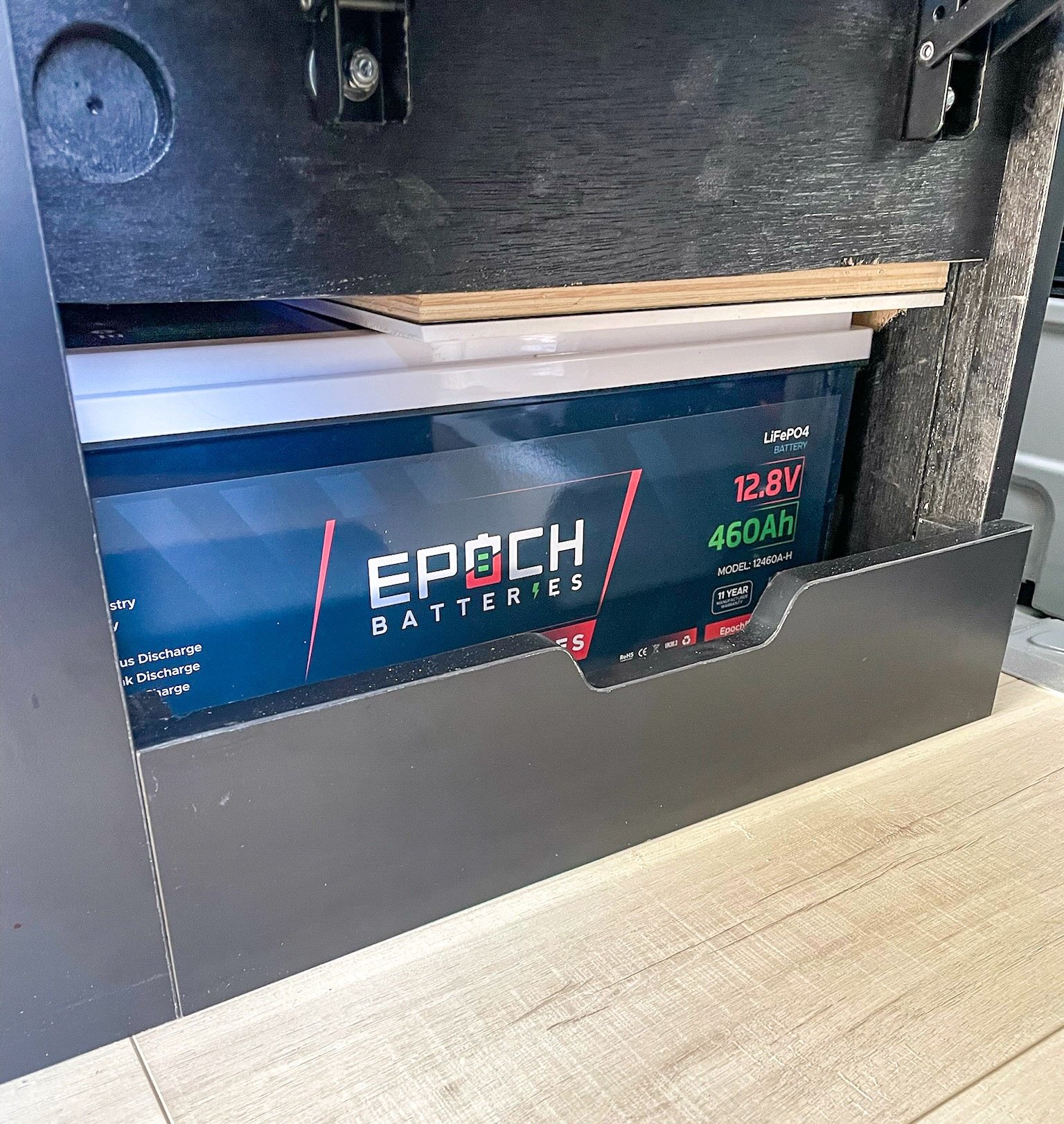
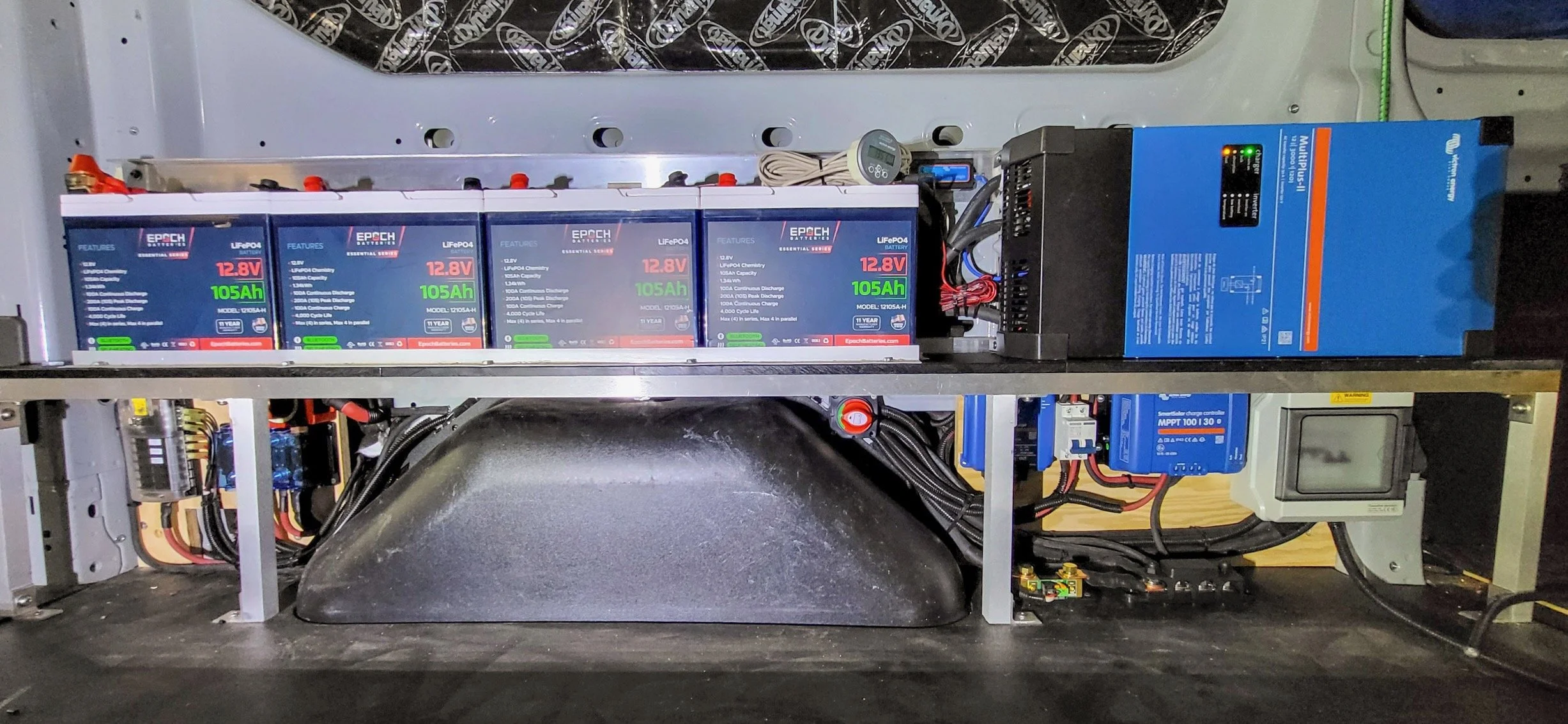
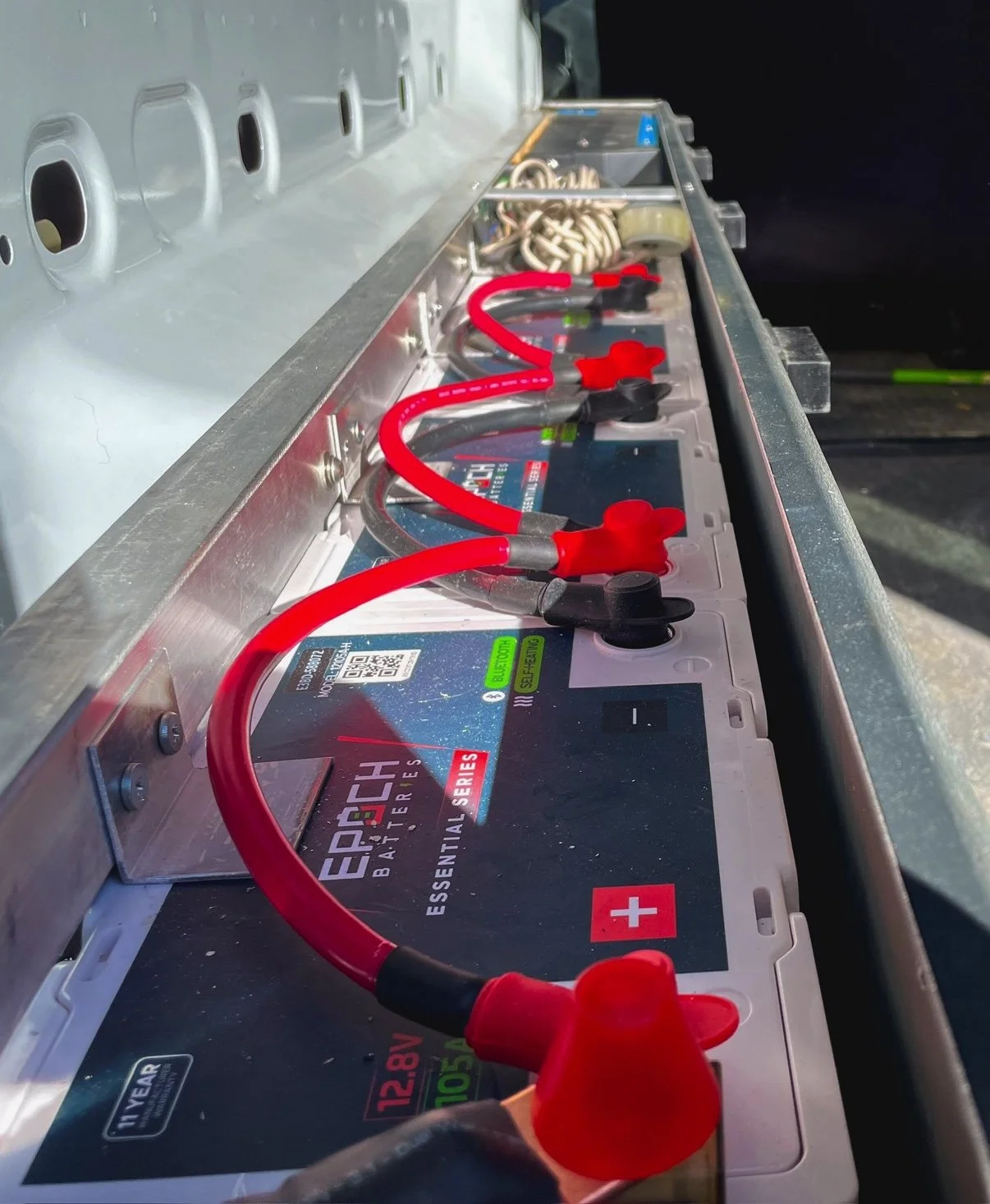
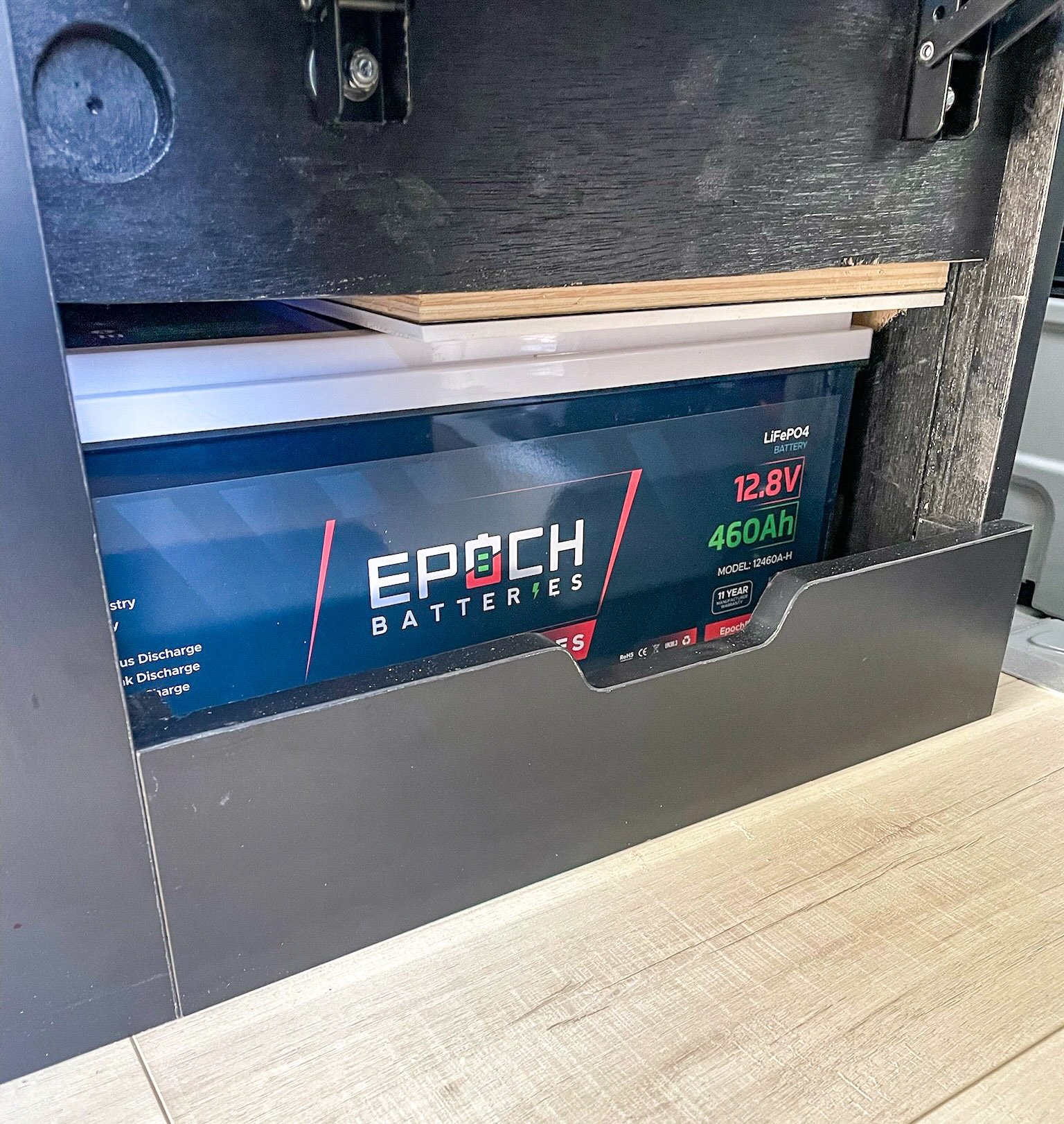
We have used Epoch batteries in a bunch of our latest builds and they offer: best in class warranty, relative light weight and small form factor, high capacity budget friendly options. This 12v option is available in 105ah, 300ah, and 460ah sizes.
A great battery bank to start with when designing a custom electrical system for your van.
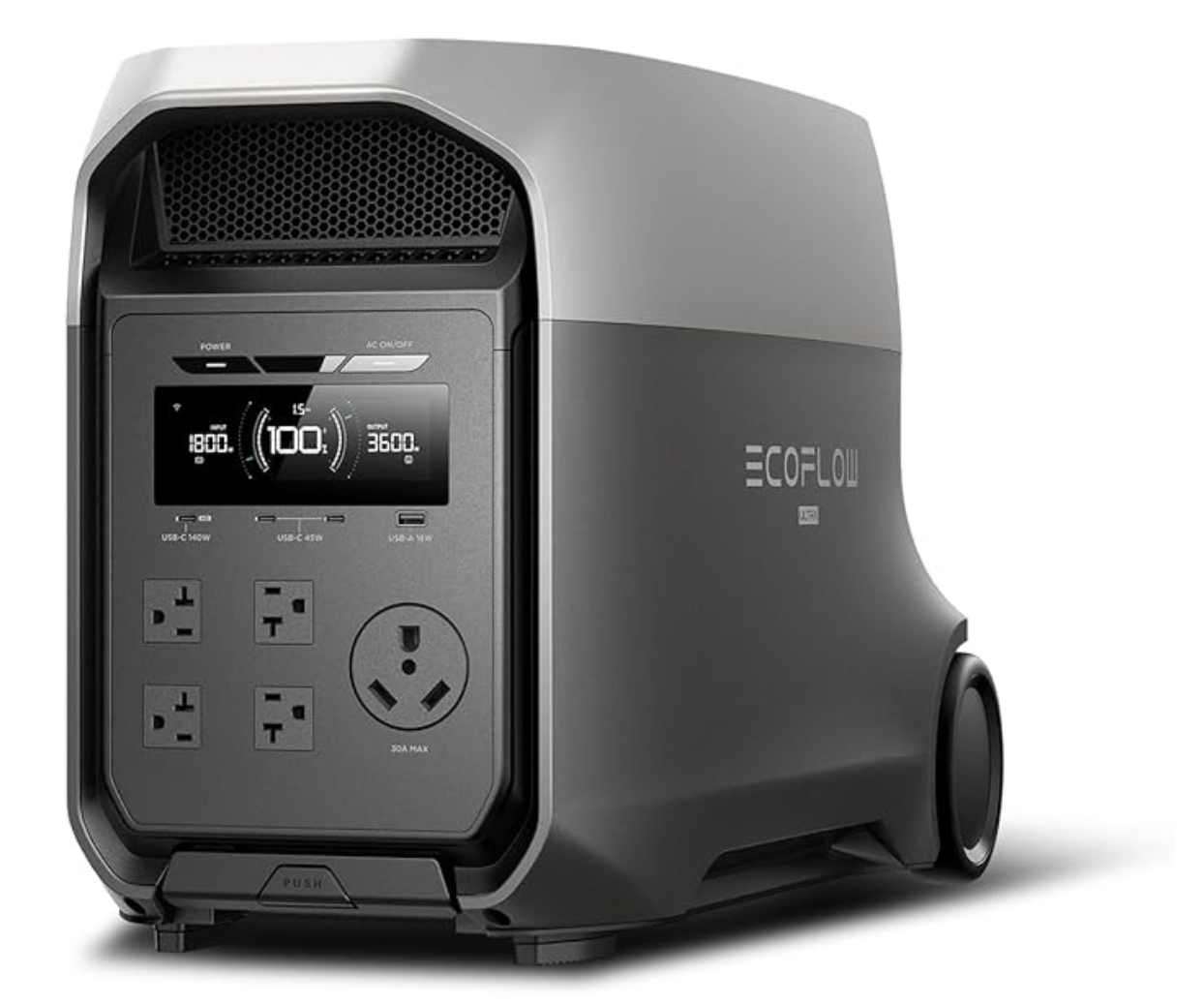
ecoflow All-in-one Solutions
For those seeking a plug-and-play option, not a complex electrical cabinet. If you’re looking to streamline your setup, a portable all-in-one solution provides ample energy in a fraction of the space.
It’s the ultimate shortcut to a functional van, allowing you to electrify your rig in minutes rather than days, while skipping the specialized tools and wiring complexity of a custom install.
Battery Comparison
| Feature | Epoch 460Ah | EcoFlow Delta 3 Pro |
|---|---|---|
| Unit Weight | 84 lbs (38 kg) | 113.5 lbs (51.5 kg) |
| Power Output | 5.88 kWh Capacity / 200A+ Cont. Discharge | 4.09 kWh Capacity / 4000W AC Output |
| Self-Heating? | Internal (Auto-activates during cold charge) | Not included |
| Best For | Full-time off-grid living, campervan house banks, and high-load RVs. | DIY car campers, weekenders, and those needing a home backup. |
| Typical Use | "One and done" huge energy storage for professional installations. | All-in-one portable solution (Includes outlets and solar charger). |
All of the battery options offer pros and cons, some sacrifice features for a lower price, or minimize optionality for easy installation. Every camp set up has its own set of objectives and constraints, and choosing a battery can make or break your ability to maintain electrical flow for the systems that you need to keep running.
1. Sizing Your System: The kWh Audit
Before purchasing a battery, you must determine your daily energy budget. While many DIY builders use Amp-hours (Ah), measuring in Kilowatt-hours (kWh) is more accurate for comparing different systems and voltages.
How to calculate your typical daily kWh outflow:
List your appliances: Identify everything that draws power (Fridge, Starlink, Fan, etc.).
Determine Wattage: Find the Watts (W) each device uses.
Estimate Hours: Estimate how many hours per day (h) each device runs.
The Formula: (Watts×Hours)÷1000=Daily kWh.
Example: A 50W fridge running 12 hours a day consumes 0.6 kWh daily.
Far Out Ride put together a handy tool to size your own system based on the devices and appliances you need powered on the road
The "Buffer for Success": We recommend adding a 30–40% safety buffer to your total daily kWh draw. This ensures you have enough capacity to survive cloudy days or extreme temperatures without power failure.
2. Choosing Your Recovery MethodS: Alternator vs. Solar
Once you know your daily kWh outflow, you need a strategy to put that energy back.
Alternator Charging (DC-to-DC): This is the most reliable path for travelers who drive daily. Using a dedicated DC-to-DC Charger safely pulls high-amperage power from your engine to replenish your bank. It is the fastest recovery method for custom builds like the Epoch 460Ah.
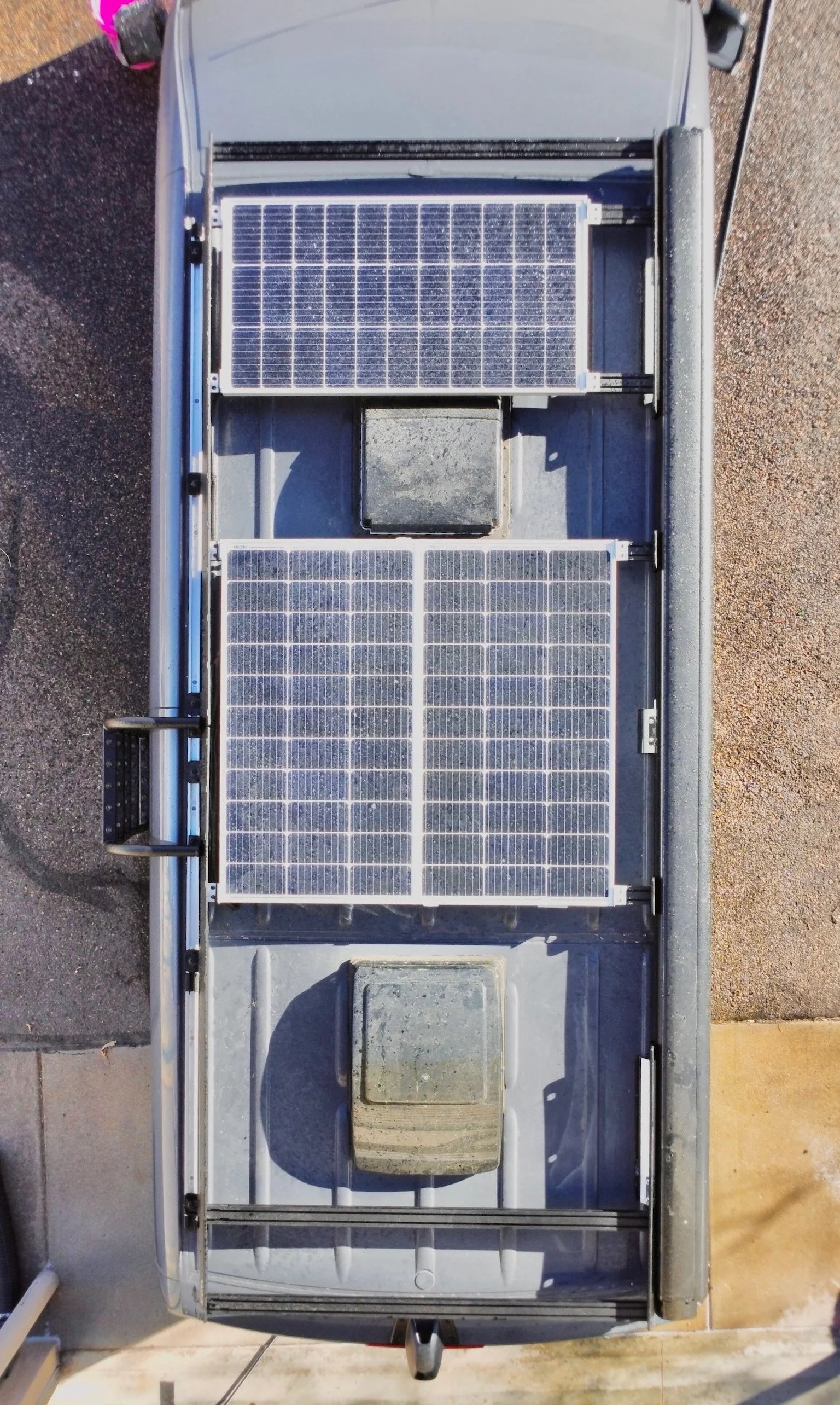
Solar Charging: For stationary "boondocking," solar is your lifeblood. By pairing a roof-mounted array with a Solar Charge Controller, you gain true off-grid independence without needing to move the vehicle.
The Hybrid Approach: Most of our builds utilize both. If your battery capacity is high, having multiple charging inputs ensures you rarely hit zero, regardless of weather or driving habits.
3. Finding Your Place on the Power Spectrum
Understanding your travel profile helps you decide between a high-capacity custom bank like the Epoch 460Ah or the portable versatility of the EcoFlow Delta 3 Pro.
| Travel Profile | Typical Setup | Energy Strategy |
|---|---|---|
| The Full-Timer | High-draw appliances: Induction cooktops, 12V Air Conditioning, and Starlink. | High Capacity: Needs 5kWh+ of storage (Epoch 460Ah). Relies on heavy DC-DC alternator charging to replenish the bank during frequent travel. |
| The Digital Nomad | Consistent mid-range draw: Laptops, external monitors, and constant refrigeration. | Hybrid Reliability: Typically paired with 2kWh to 3kWh (Epoch 105Ah). Uses roof solar for stationary workdays and alternator charging on move days. |
| The Weekender | Light loads: MaxxAir fan, LED lighting, and phone/tablet charging overnight. | Portable Versatility: An all-in-one solution (EcoFlow Delta 3 Pro) is ideal. Charge at home pre-trip and use portable solar to maintain levels while parked. |
How to Decide:
Go Custom (Epoch) if you are building a permanent electrical cabinet and need the highest possible energy density (5.88 kWh) for long-term off-grid living.
Go All-In-One (EcoFlow) if you value budget freindly portability, ease of installation, and a system that can pull double-duty as a home backup solution during the work week.
Not sure which setup fits your van? Book a Power Consultation ➜
Follow us on Social
Check us out on social media, too, & make sure to leave a comment every now and then, it helps us reach the right people.