Electrical
The heart of every modern camper van is the electrical system.

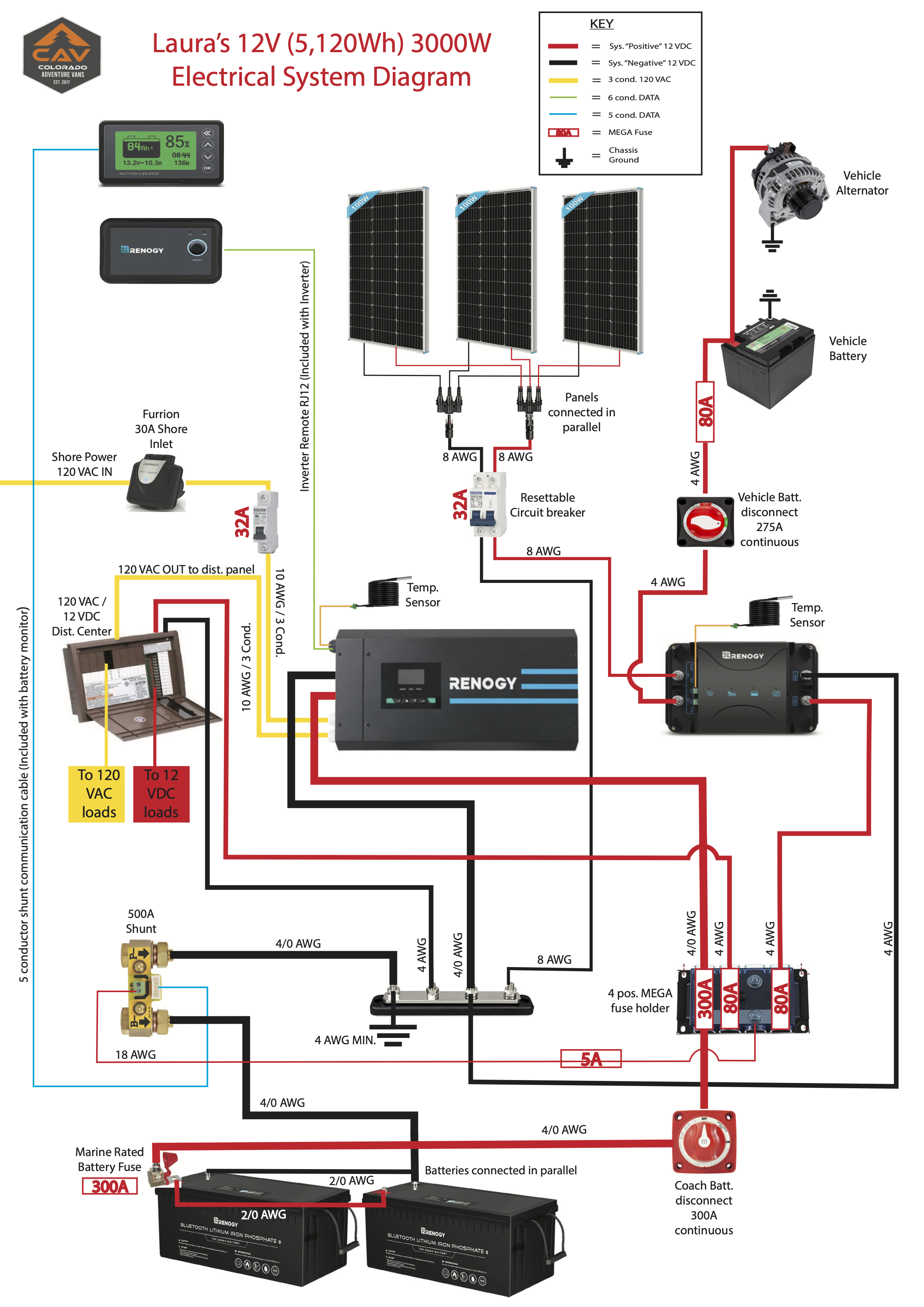
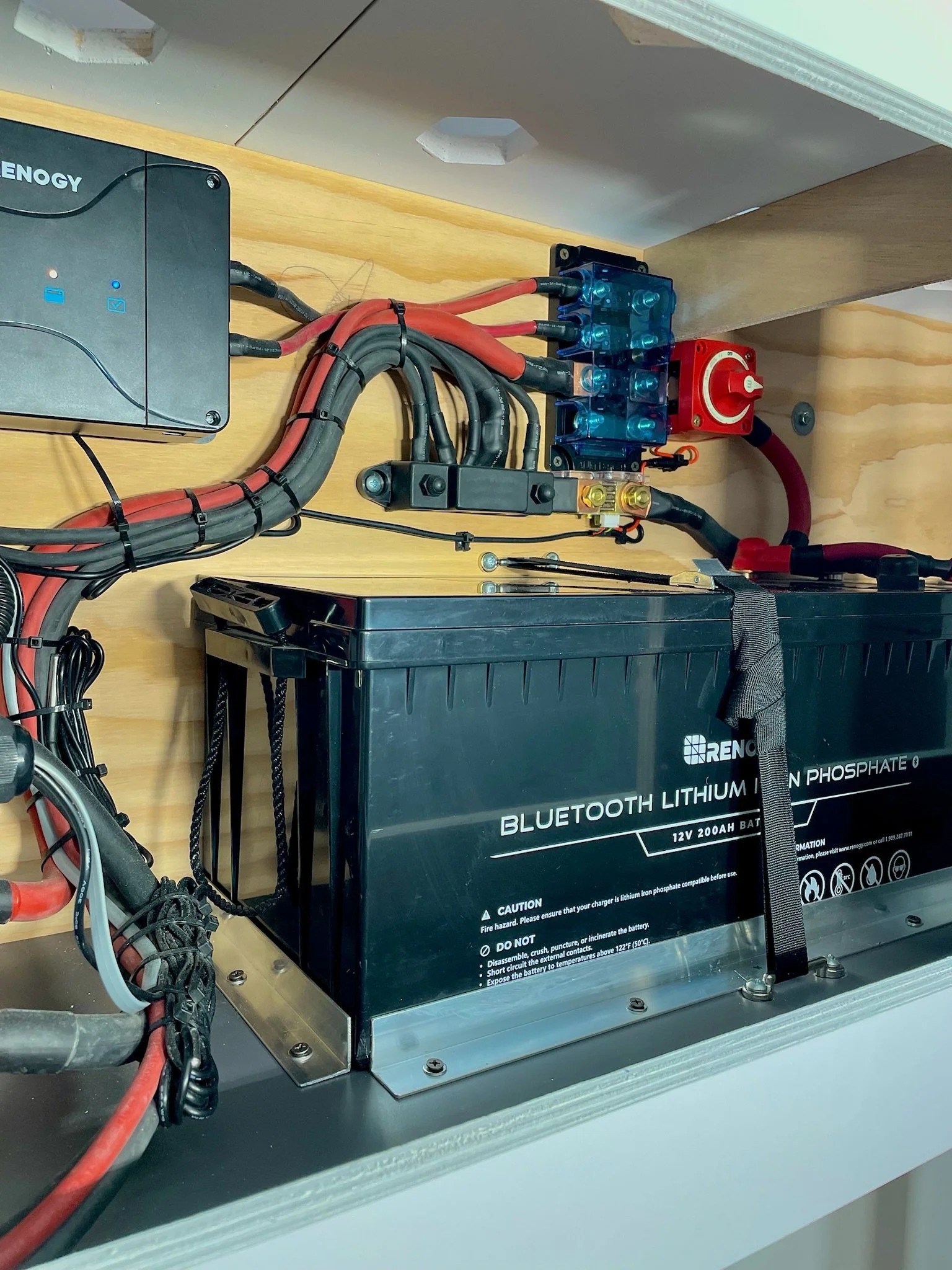
Since this van doesn’t have an air conditioner, the 400Ah of LiFePO4 batteries will keep Laura powered up and able to use all her appliances wherever her van takes her.
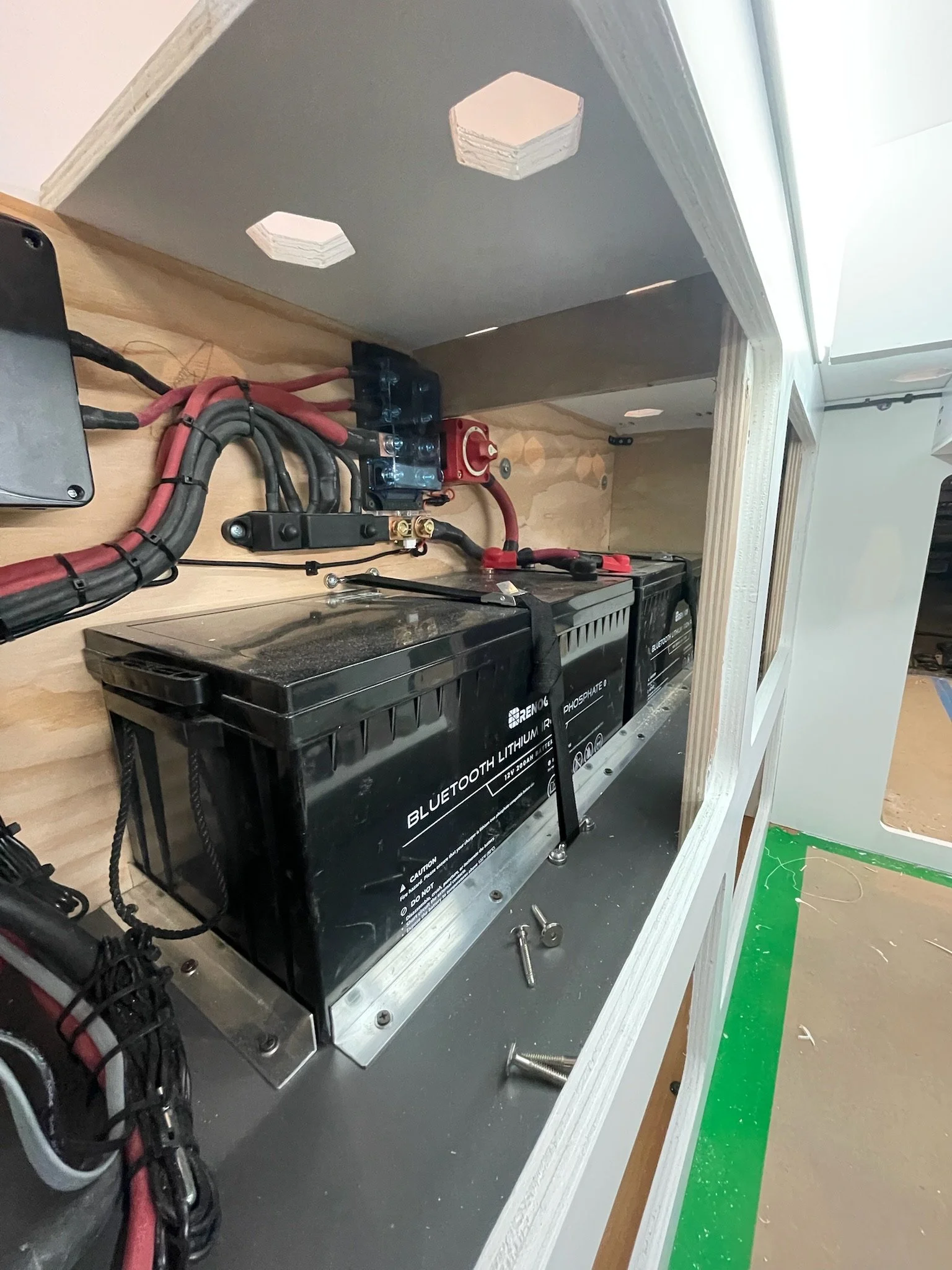
Battery: Renogy 200Ah LiFePO4 battery (2) - plenty of power to keep all the appliances in this van running on the road and off the grid. Laura brought us these batteries that she had bought when she first got the van and we gladly built the system around the components she provided.
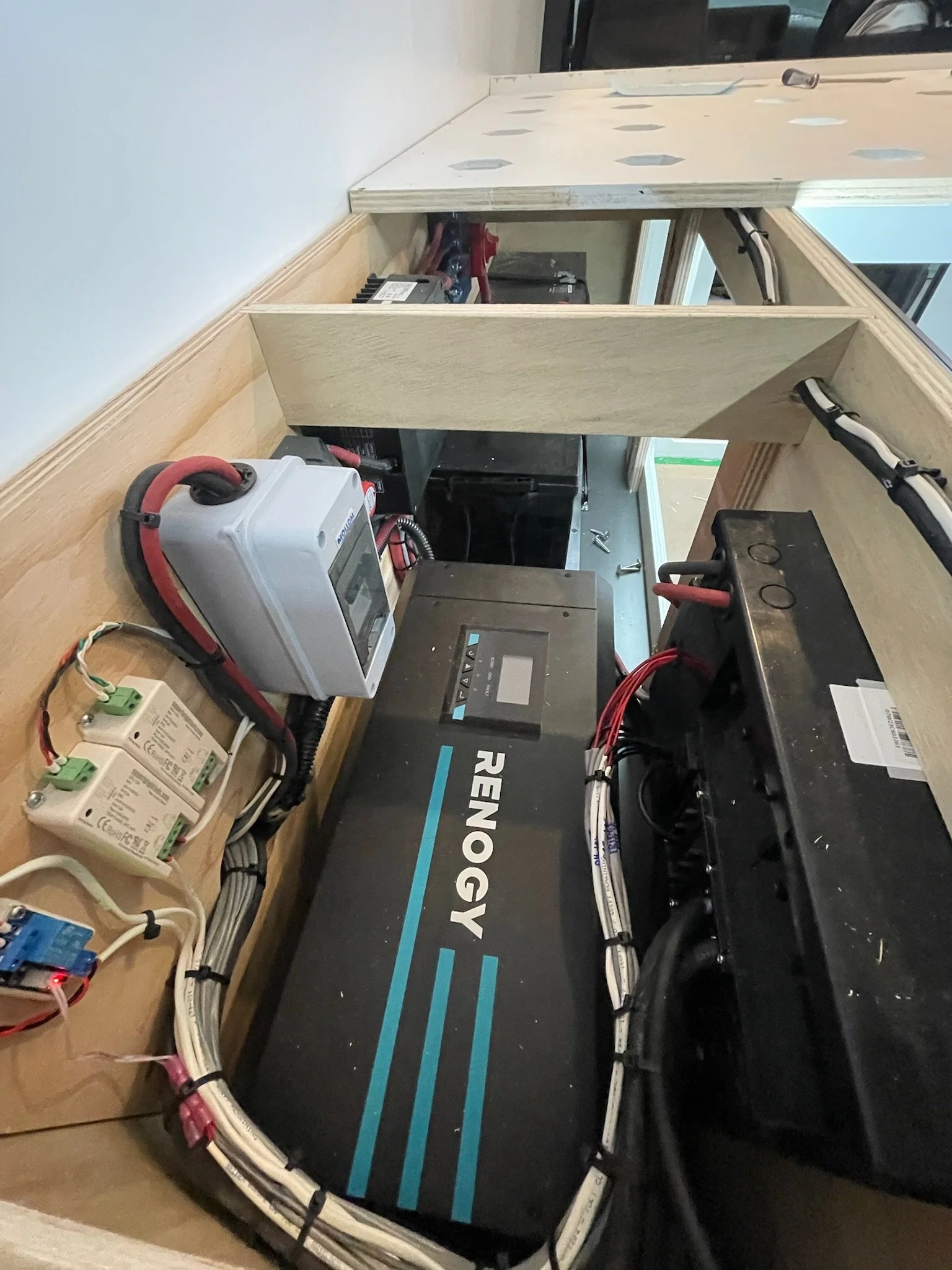
Inverter: Renogy 3000W Inverter/Charger - we opted for a 3000W inverter for plenty of capacity for anything Laura can plug into her 120V outlets.
DC-DC: Renogy 50A DC-DC plus MPPT - 50A of charging while driving as well as a charge controller for the 300W of solar we installed on the roof. We always install a battery disconnect switch in line so that we can safely service the system if needed.
Battery Monitor: Renogy 500A Battery Monitor with Shunt - It’s only two components, a basic monitor screen and a shunt rated at 500A. It monitors voltage, calculates battery percentage, shows hours of energy remaining, and is super easy to program. It’s a simple and effective system that makes the job of monitoring your battery system and health easy.
Solar Panels: We installed (3) 100W Newpowa solar panels onto the Flatline Low Pro Sprinter 144 Roof Rack to keep the system charged up off the grid.
Power Distribution: Power distribution always starts with a main battery MRBF fuse and a master disconnect switch. After that, power is distributed at the 12 VDC MEGA fuse center to all 12 VDC components and/or loads. Further downstream 12 VDC along with 120 VAC from the inverter is then further distributed into branch circuits at the WFCO WF-8930 Power distribution center to all 12 VDC and 120 VAC appliances and devices.
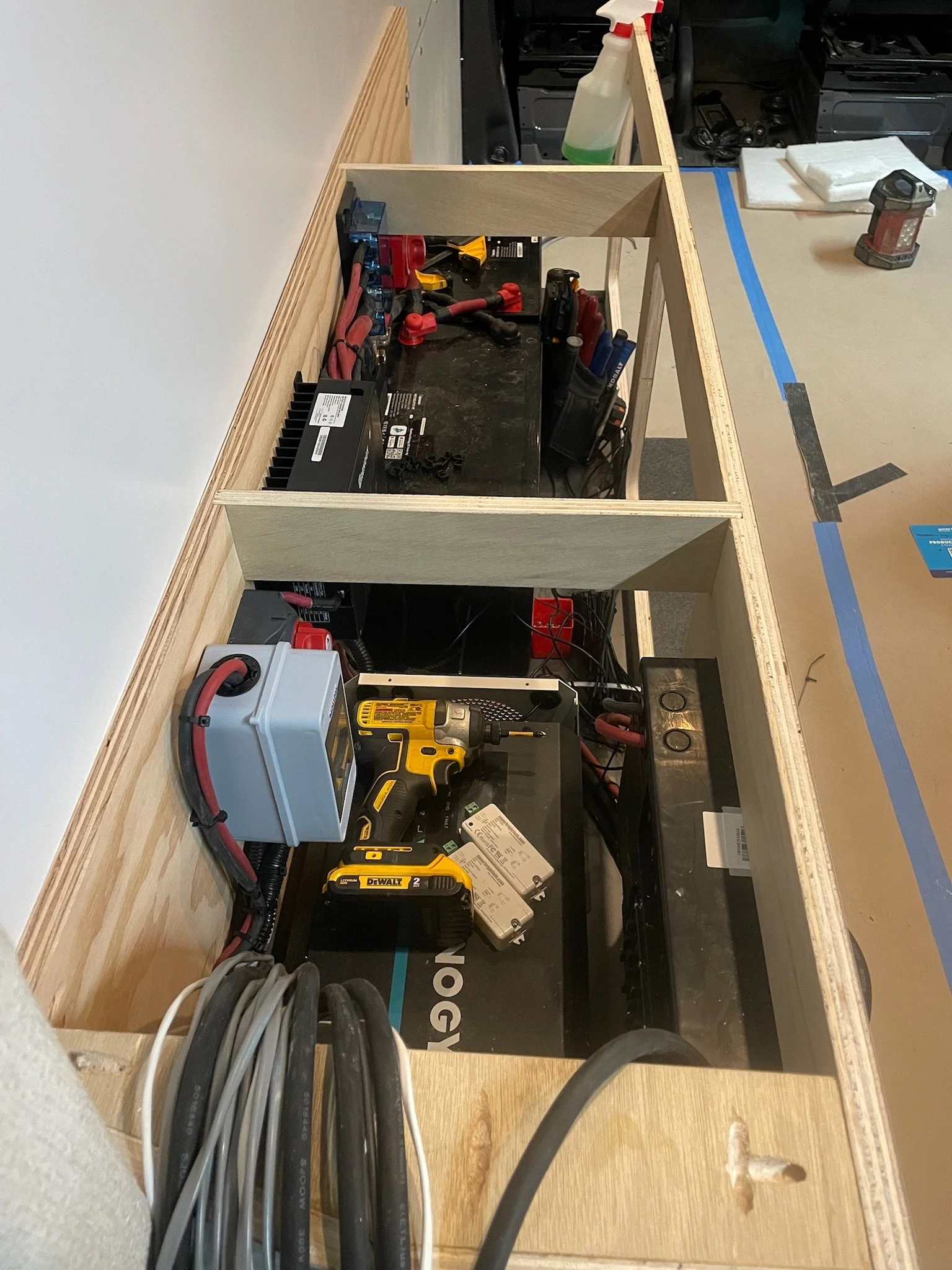
Miscellaneous: Some of the small parts we used constructing our system
Furrion Shore Power Inlet and 32A Mini Circuit Breaker
We get most of our cable from Windy Nation
The main system components for this van are compiled in our Amazon Storefront.